



What's Happening?
The U.S. grain storage infrastructure, crucial for the agricultural supply chain, is facing challenges as its growth has not kept pace with increasing crop production. From 2000 to 2019, both storage capacity and crop production grew at a rate of approximately
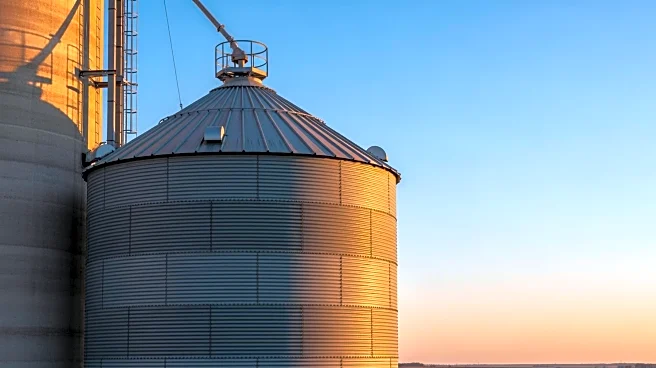
350 million bushels per year. By 2019, storage capacity exceeded 25 billion bushels, aligning well with production needs. However, since 2020, the growth in storage capacity has slowed significantly, while production continues to rise. In 2025, high corn yields and increased acreage pushed production close to national storage limits, with surplus capacity dropping to 5%, compared to a long-term average of 15%. As of December 1, 2025, 80% of on-farm storage was utilized, with off-farm facilities at 65%. This trend raises concerns about potential bottlenecks in transportation and marketing, especially with challenges like low water levels on the Mississippi River affecting shipping.
Why It's Important?
The slowdown in storage capacity growth poses significant risks to the U.S. agricultural sector. High utilization rates could lead to bottlenecks, affecting the efficiency of grain movement from farms to processors and export terminals. This could result in price volatility between inland and export markets, impacting farmers' profitability. The reluctance to invest in new storage facilities is influenced by rising construction costs, higher interest rates, and uncertain returns, which depend heavily on market conditions. If storage capacity does not expand to match production growth, the agricultural supply chain could face increased pressure, potentially affecting the U.S.'s ability to meet both domestic and international demand efficiently.
What's Next?
The grain industry must evaluate whether future production growth will necessitate renewed investment in storage infrastructure to maintain supply chain efficiency. Stakeholders, including farmers, grain companies, and investors, need to consider the potential benefits of expanding storage capacity against the backdrop of rising costs and market uncertainties. Addressing these challenges is crucial to ensuring that the U.S. agricultural sector can continue to operate smoothly and capitalize on production increases without facing logistical bottlenecks.