



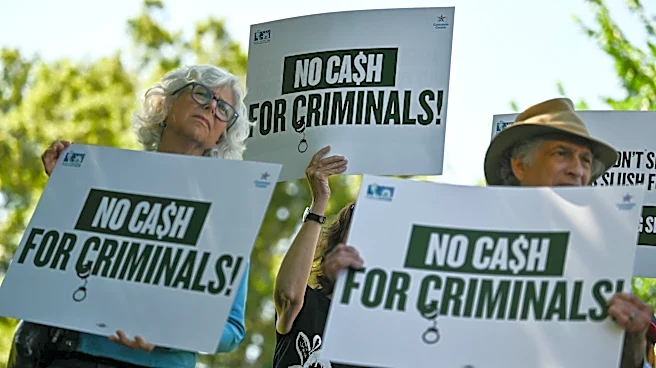


What's Happening?
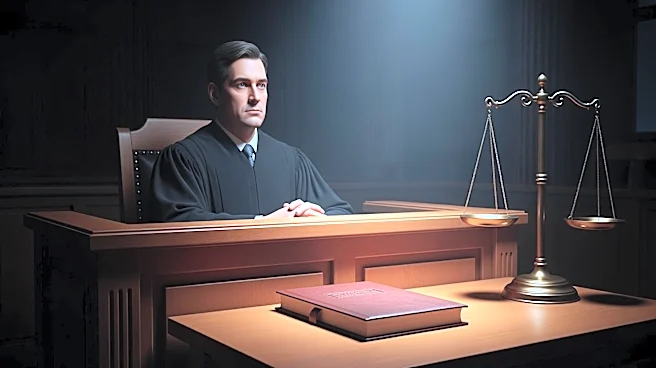
The Trump administration is facing judicial scrutiny over allegations of collusion involving a settlement fund, referred to as the 'Terrorist Slush Fund.' Judge Kathleen Williams has ordered the Department of Justice (DOJ) to respond to claims that Trump's
personal lawyers and DOJ attorneys engaged in a collusive settlement. The court is questioning whether the parties involved were truly adversarial and if the case dismissal was based on deception. Additionally, Judge Leonie Brinkema has issued an injunction preventing the government from funding the Anti-Weaponization Fund until a ruling is made. Despite these legal challenges, the Trump administration has indicated a temporary halt to the fund, citing respect for the courts and the distraction it has caused.
Why It's Important?
This legal confrontation highlights ongoing tensions between the judiciary and the Trump administration, particularly concerning the integrity of legal processes and the use of government funds. The outcome of these cases could have significant implications for the administration's ability to implement controversial financial mechanisms. It also underscores the judiciary's role in checking executive actions that may overstep legal boundaries. The situation reflects broader concerns about the politicization of justice and the potential misuse of funds, which could impact public trust in government institutions.
What's Next?
The DOJ is required to file a response by June 12, 2026, addressing the allegations of collusion and deception. The court's decision on whether to reopen the case could set a precedent for how similar cases are handled in the future. The administration's compliance with the injunction and the potential for legislative action to prevent similar funds from being established are also areas to watch. Stakeholders, including political leaders and legal experts, will likely continue to debate the implications of these judicial orders.