


What's Happening?
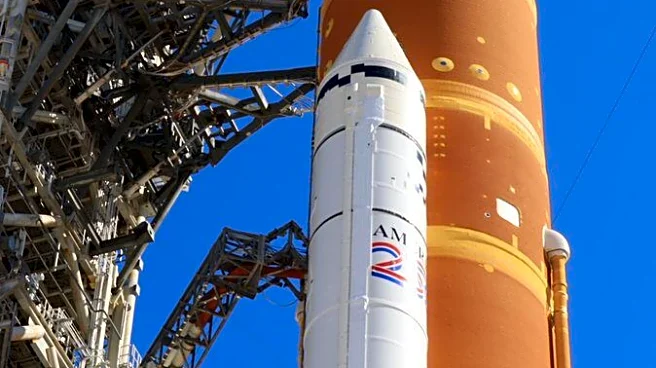
NASA is optimistic about launching the Artemis II mission on March 6, 2026, following a successful second fueling test of the Space Launch System rocket. The test, conducted at Kennedy Space Center, showed no significant leaks, boosting confidence in the rocket's
readiness. The mission will send four astronauts on a journey around the Moon, marking the first crewed flight of the Space Launch System and Orion spacecraft. The mission is a key part of NASA's Artemis program, which aims to return humans to the Moon and prepare for future missions to Mars.
Why It's Important?
The Artemis II mission is a crucial step in NASA's plan to establish a sustainable human presence on the Moon and advance human space exploration. Successfully launching and completing this mission will demonstrate the capabilities of the Space Launch System and Orion spacecraft, paving the way for future lunar exploration. The mission also represents a significant technological and logistical achievement, as it involves complex coordination and testing of new systems. The success of Artemis II will bolster NASA's leadership in space exploration and inspire further international collaboration in lunar and deep space missions.
What's Next?
NASA will continue preparations for the March 6 launch, including a flight readiness review and final checks of the rocket and spacecraft. The Artemis II crew will enter quarantine to ensure their health before the mission. If the launch proceeds as planned, the mission will last 10 days, with the crew traveling farther from Earth than any humans have before. The mission's success will set the stage for Artemis III, which aims to land astronauts on the lunar surface.