






What's Happening?
A new analysis has found that China's rapid expansion of solar power, while contributing to clean energy goals, is having unintended negative consequences for bird diversity. The study, published in Science and led by Huiming Zhang of Nanjing University
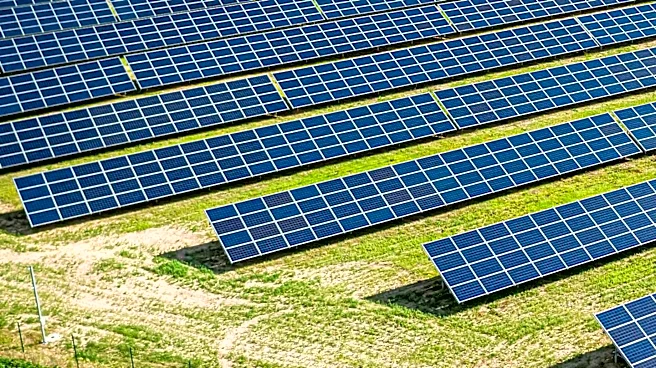
of Information Science and Technology, examined birdwatching and policy data from over 2,300 counties across China. It revealed that areas with stricter policies enforcing solar energy development have experienced decreases in bird diversity over the past decade. This finding adds to existing evidence that industrial development and habitat loss contribute to declines in bird populations. The construction of solar power plants can alter local vegetation and landscapes, impacting the creatures that inhabit these areas. Even attempts at 'inferior greening'—planting new vegetation after solar farm construction—did not effectively mitigate the loss of bird diversity.
Why It's Important?
This study highlights a critical challenge in the global transition to renewable energy: the potential for clean energy infrastructure to negatively impact biodiversity. While solar power is essential for combating climate change, its deployment must be carefully managed to avoid creating new ecological crises. The findings from China serve as a cautionary tale for other nations, including the U.S., that are heavily investing in solar energy. It underscores the need for comprehensive environmental impact assessments and strategic planning to site solar projects in locations with minimal ecological conflict. Without such considerations, the pursuit of one environmental goal (reducing carbon emissions) could inadvertently undermine another (preserving biodiversity), leading to a trade-off that ultimately harms overall environmental health.
What's Next?
The researchers hope their analysis will encourage a more integrated approach to energy and conservation goals in China and globally. The key takeaway is not to slow the energy transition but to steer large solar projects towards sites with lower ecological conflict, subject to thorough site-specific assessments. This includes implementing robust biodiversity safeguards from the initial planning stages of any solar development. Future research may focus on examining specific bird population numbers rather than just diversity measures to gain a more nuanced understanding of the impacts. Policymakers and developers in the U.S. and other countries can learn from China's experience, emphasizing the importance of balancing renewable energy expansion with ecological protection to ensure a truly sustainable future.
Beyond the Headlines
The study's findings reveal a deeper ethical and practical dilemma: how to achieve sustainable development without sacrificing one environmental good for another. The concept of 'inferior greening' points to the complexity of ecological restoration and the limitations of superficial environmental mitigation efforts. It suggests that simply adding greenery back to a disturbed site may not replicate the intricate ecological functions of natural habitats. This raises questions about the true cost of large-scale infrastructure projects, even those with ostensibly positive environmental aims. It also underscores the need for interdisciplinary approaches, combining expertise in energy policy, ecology, and urban planning, to develop solutions that address both climate change and biodiversity loss holistically. The long-term health of ecosystems depends on recognizing and addressing these interconnected challenges.