



What's Happening?
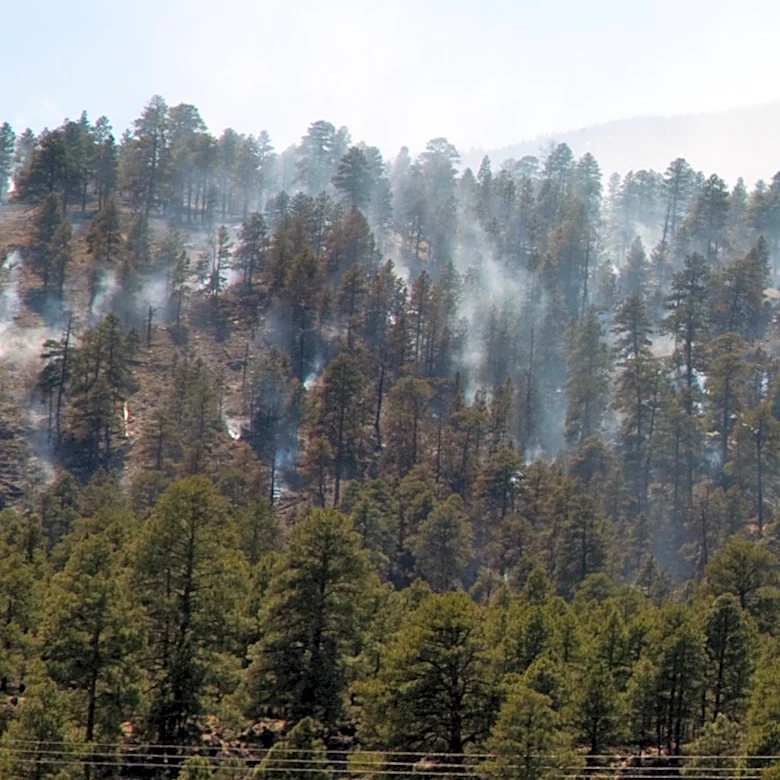
Arizona has recorded the lowest number of acres burned by wildfires in a quarter-century during 2026. Despite this positive development, fire crews in the state are not reducing their vigilance, recognizing that the risk of wildfires persists year-round
in the desert environment. Carelessness is identified as the cause for 9 out of every 10 wildfires, with some incidents, like the Pocket Fire near Sedona, incurring costs in the tens of millions of dollars. The Tonto National Forest, spanning nearly 3 million acres, highlights the immense effort required to control fires when they ignite in such vast natural spaces. Residents acknowledge that the concept of a distinct 'wildfire season' no longer applies, as the threat is continuous.
Why It's Important?
While Arizona's record-low acreage burned in 2026 is a welcome statistic, the underlying message of continuous vigilance is critical for the entire U.S., particularly in states prone to wildfires. The fact that human carelessness causes the vast majority of fires underscores the importance of public education and prevention campaigns. The significant financial cost of even a single fire, such as the Pocket Fire, demonstrates the economic burden wildfires place on state and federal resources. For U.S. communities, especially those bordering wildland areas, the year-round risk means that preparedness and mitigation efforts must be ongoing, impacting local economies, public safety, and infrastructure. This situation highlights the need for sustained investment in fire management and community resilience programs.
What's Next?
Despite the favorable year, Arizona's fire crews will continue to focus on prevention, preparedness, and rapid response. This includes ongoing public awareness campaigns to reduce human-caused fires and maintaining readiness for potential outbreaks. The experience of 2026, while positive in terms of acres burned, does not diminish the long-term trend of increasing wildfire risk due to climate change and other factors. Therefore, state and local agencies will likely continue to invest in advanced firefighting technologies, improved land management practices, and community engagement to foster a culture of fire safety. The continuous nature of the wildfire threat in Arizona serves as a model for other U.S. regions facing similar environmental challenges, emphasizing that vigilance is a permanent state.
Beyond the Headlines
The narrative of a 'record-low year' in Arizona, juxtaposed with the constant threat of wildfires, reveals a deeper societal challenge: adapting to a changing climate where traditional seasonal patterns are disrupted. This situation prompts a re-evaluation of how communities interact with their natural surroundings, particularly in areas susceptible to fire. It also highlights the psychological impact on residents who live with the perpetual threat of fire, influencing everything from property insurance to community planning. The emphasis on human-caused fires points to a need for greater individual responsibility and collective action in prevention. Ultimately, Arizona's experience underscores that even in 'good' years, the long-term strategy must be one of continuous adaptation, education, and resource allocation to mitigate an ever-present danger.