






What's Happening?
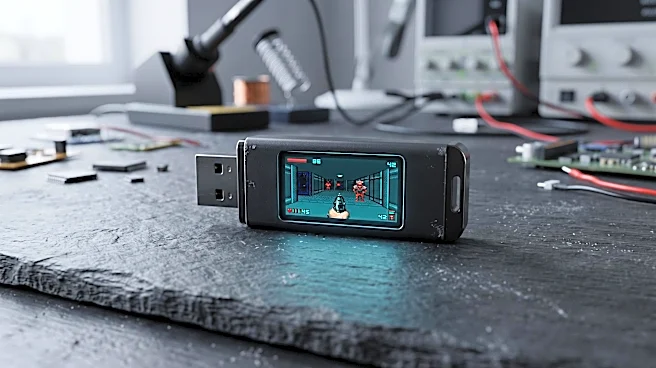
Hardware hacker Aaron Christophel has successfully ported and run the classic video game 'Doom' on the built-in LCD screen of a MOVESPEED MSSU10 USB flash drive. The process involved dumping the firmware from the drive's display chip, which had its markings
scrubbed, through an open debug port. Christophel then utilized artificial intelligence to reverse-engineer the hardware, enabling the game to run on the small screen. The game is controlled by a PC script, doomctl.py, which translates key presses into timed file transfers to and from the drive. This innovative method allows for basic gameplay, although performance is limited to approximately 13 frames per second, with only the first map, E1M1, fitting on the chip's flash memory and no sound output.
Why It's Important?
This development highlights the increasing accessibility and versatility of hardware hacking, particularly when augmented by AI. The use of AI to reverse-engineer hardware and port software significantly reduces the time and expertise traditionally required for such complex tasks, as Christophel noted he could not have achieved this in a few hours without AI. This could inspire a new wave of hobbyists and developers to explore unconventional applications for everyday devices, pushing the boundaries of what embedded systems can achieve. It also underscores the potential for AI to democratize complex technical fields, making advanced reverse engineering and software development more attainable for individuals with limited resources or specialized knowledge. The project's open-source nature further encourages community engagement and replication.
What's Next?
The open-source nature of Christophel's project, including the published code and prebuilt firmware, is expected to attract significant attention within the hardware hacking community. This could lead to similar projects and modifications on other devices with embedded screens or microcontrollers. Enthusiasts may attempt to optimize the game's performance, expand the playable content beyond the first map, or even integrate sound capabilities if suitable hardware is available. The project also serves as a practical demonstration of AI's capabilities in hardware analysis and software adaptation, potentially influencing future educational and research initiatives in these areas. The ease of replication, requiring only a debug probe and the suggestion to back up stock firmware, makes it accessible for a wider audience to experiment.
Beyond the Headlines
Beyond the immediate technical achievement, this project touches upon broader themes of digital ownership and the right to repair and modify consumer electronics. The act of reverse-engineering a device with scrubbed markings to unlock its hidden potential challenges manufacturers' attempts to control how their products are used. It also raises questions about the ethical implications of using AI for reverse engineering, particularly in contexts where intellectual property or security might be concerns. Furthermore, the project exemplifies a growing trend of 'retro-computing' and finding novel ways to run classic software on modern, unexpected platforms, fostering a culture of creative problem-solving and digital archaeology within the tech community.