









What's Happening?
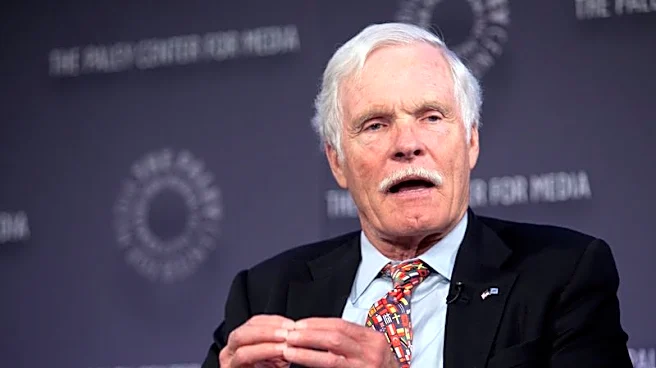
Ted Turner, the media mogul who founded CNN, has passed away, prompting reflection on his transformative impact on news consumption. Turner launched CNN in 1980, pioneering the 24-hour news cycle that has since become a staple in media. His vision reshaped
how news is delivered and consumed, influencing the creation of other networks like Fox News. While Turner's innovation provided constant access to news, it also introduced challenges such as media overload and increased partisanship. The nonstop news cycle has been linked to rising stress levels among Americans, as constant exposure to negative news can impact mental health. Turner's legacy is a double-edged sword, offering both unprecedented access to information and contributing to the current media landscape's complexities.
Why It's Important?
The 24-hour news model introduced by Turner has had profound implications for media and society. It has democratized access to information, allowing people to stay informed around the clock. However, it has also contributed to a polarized media environment, where networks often cater to specific political ideologies. This model has been criticized for prioritizing sensationalism and conflict, which can exacerbate societal divisions. The constant news cycle can lead to information fatigue, affecting public perception and engagement with news. As media consumption habits evolve, understanding Turner's impact is crucial for addressing the challenges of modern journalism and fostering a more balanced media ecosystem.