








What's Happening?
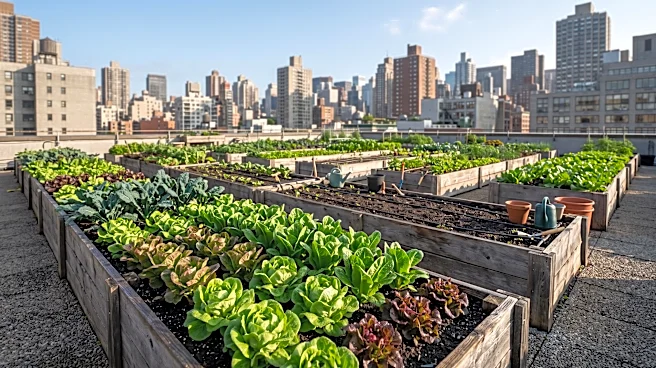
Emmy-winning actor Nick Offerman has narrated the documentary film 'Fork in the Road.' The film focuses on small-scale farmers across various U.S. locations, including Kentucky, Missouri, Alaska, California, and an urban farmer in New York City. It explores
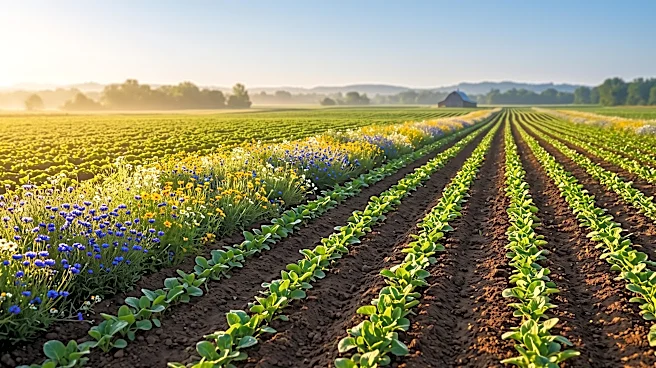
how these farmers, some of whom are ocean farmers, are implementing regenerative farming techniques. The documentary posits that these methods can help repair ecological degradation and mitigate the effects of climate change. Additionally, the film suggests that regenerative farming contributes to building local food systems, which in turn supports small farmers and provides consumers with healthier, fresher food options. Offerman's involvement brings a recognizable voice to the film's message about sustainable agricultural practices.
Why It's Important?
The narration by a prominent figure like Nick Offerman for 'Fork in the Road' significantly elevates the visibility of regenerative farming practices. This is important because it can draw mainstream attention to sustainable agriculture, which is crucial for addressing environmental challenges and food security in the U.S. The film's focus on repairing ecological degradation and combating climate change through farming techniques highlights a potential pathway for environmental policy and agricultural innovation. By showcasing successful small-scale farmers, the documentary could inspire more individuals and communities to adopt similar practices, fostering local food systems and potentially reducing reliance on large-scale industrial agriculture. This shift could have economic implications for small farmers, offering them a more sustainable livelihood, and for consumers, providing access to higher quality produce. The emphasis on healthier, fresher foods also aligns with growing public interest in nutrition and food origins.
What's Next?
The increased exposure for regenerative farming through 'Fork in the Road' could lead to greater public discourse and potentially influence agricultural policy discussions. Viewers, inspired by the film, might seek out locally sourced and regeneratively farmed products, boosting demand for these goods. This could encourage more farmers to transition to these methods, possibly with the support of new government incentives or educational programs. The film's message about ecological repair and climate change mitigation could also prompt environmental organizations and policymakers to advocate for broader implementation of regenerative practices. Furthermore, the success of this documentary might pave the way for more media projects focusing on sustainable living and environmental solutions, continuing to raise awareness and drive change in the agricultural sector and beyond.
Beyond the Headlines
The documentary 'Fork in the Road,' narrated by Nick Offerman, delves into deeper implications beyond just farming techniques. It touches upon the ethical responsibility of food production and consumption, highlighting how individual choices can contribute to broader ecological health. The film implicitly challenges conventional agricultural models by presenting regenerative farming as a viable and beneficial alternative, suggesting a cultural shift towards valuing sustainability and local economies over industrial efficiency. This could lead to a re-evaluation of food systems, emphasizing community resilience and environmental stewardship. The narrative also underscores the interconnectedness of human health, environmental well-being, and economic stability, promoting a holistic view of societal progress. By showcasing the positive impact of these practices, the film encourages a more conscious approach to food, land, and community, potentially fostering a movement towards more ethical and sustainable living.