




What's Happening?
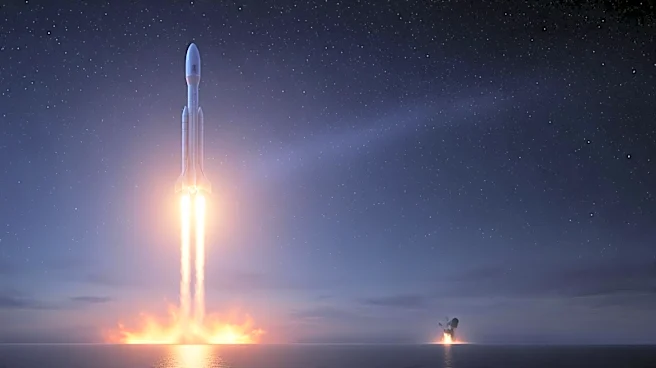
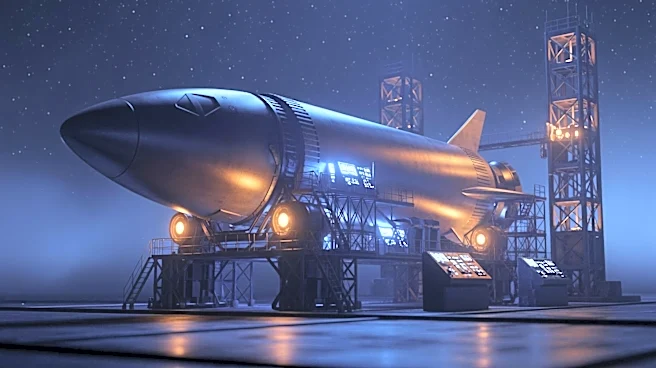
A satellite operated by Vantor's WorldView Legion captured a high-resolution image of SpaceX's Starship V3 on the launch pad at the company's Starbase site in South Texas. The launch, initially scheduled for May 21, 2026, was postponed due to technical
issues that arose late in the countdown. SpaceX is now targeting a new launch window on May 22, 2026. The Starship V3 is the latest and most powerful version of SpaceX's megarocket, designed to transition from test flights to operational missions. This iteration is crucial for NASA's Artemis missions, which aim to land astronauts on the moon. The suborbital test flight will be the 12th for the Starship series, but the first for the V3 variant.
Why It's Important?
The successful launch of Starship V3 is pivotal for SpaceX's future missions, particularly those involving NASA's Artemis program. This program is a cornerstone of U.S. space exploration efforts, aiming to return humans to the moon and eventually to Mars. The V3 variant is expected to demonstrate key capabilities such as in-space refueling and life-support systems, which are essential for long-duration space missions. A successful launch would mark a significant milestone in SpaceX's development of reusable spacecraft, potentially reducing costs and increasing the frequency of space travel. The delay highlights the technical challenges involved in advancing space technology, but also underscores the importance of rigorous testing to ensure mission success.
What's Next?
SpaceX plans to attempt the launch of Starship V3 again on May 22, 2026, during a 90-minute window starting at 6:30 p.m. EDT. The company will need to address the technical issues that caused the initial delay to ensure a successful liftoff. If successful, this launch will pave the way for further testing and eventual operational flights. Stakeholders, including NASA and the broader space exploration community, will be closely monitoring the outcome, as it could influence future collaborations and funding. The success of this mission could also bolster public and governmental support for continued investment in space exploration technologies.