

What's Happening?
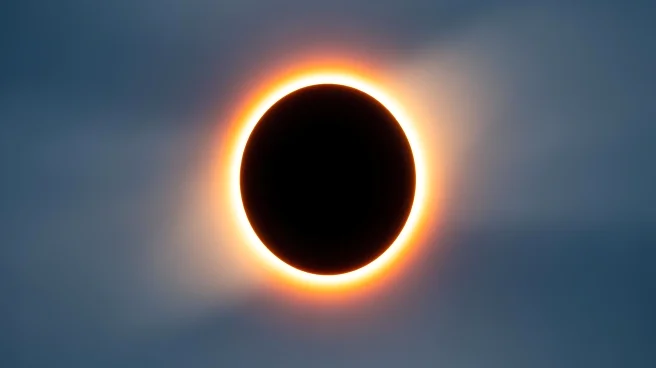
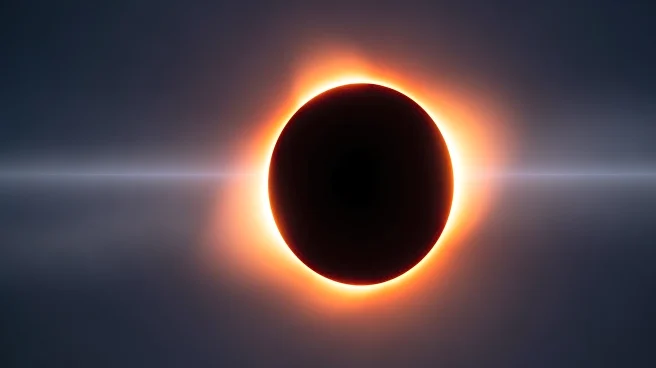
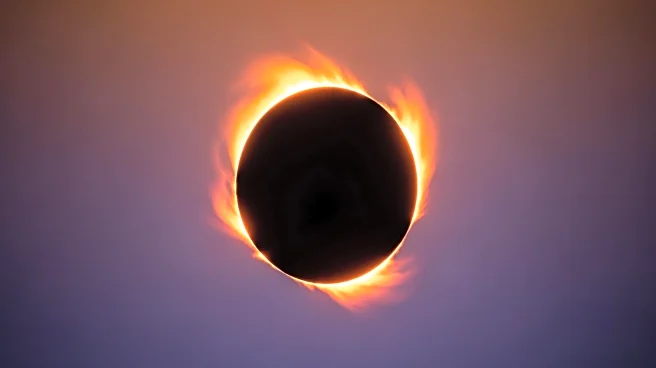
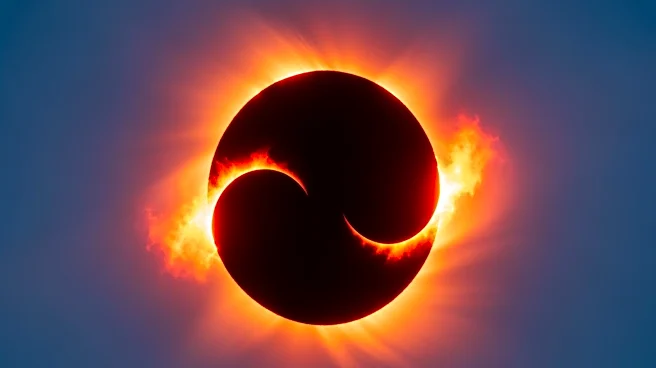
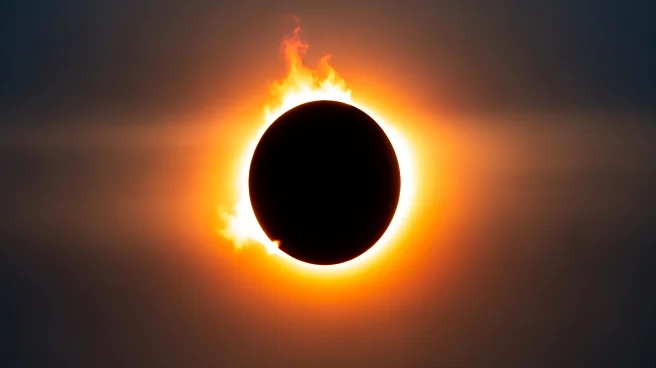
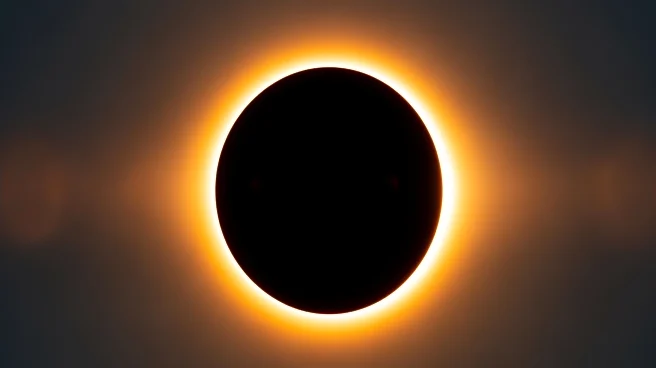
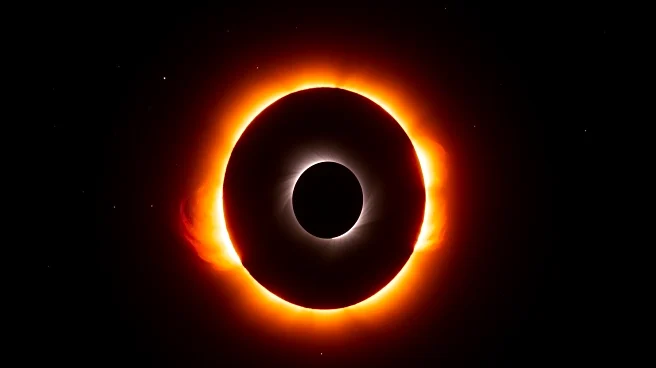
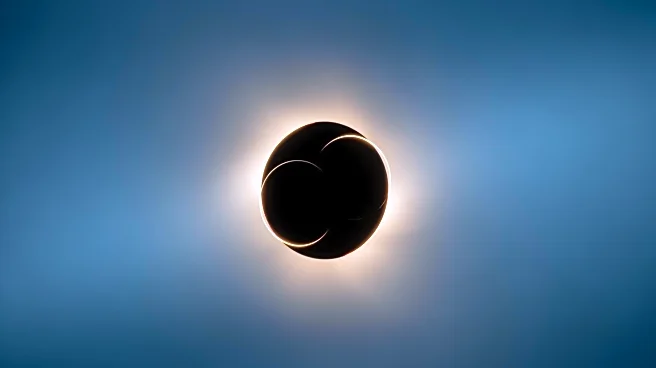
An annular solar eclipse is set to occur on February 17, 2026, primarily visible from Antarctica and parts of the Southern Ocean. During this event, the Moon will cover most of the Sun's disk, leaving a thin ring of sunlight visible, known as an annulus.
This phenomenon occurs because the Moon is at a distance from Earth where it cannot completely obscure the Sun. The eclipse will also be partially visible from the southern tip of South America, Madagascar, and parts of southern Africa, where up to 29% of the Sun will be obscured. Observers in these regions are advised to use proper solar viewing equipment, such as eclipse glasses, to safely watch the event.
Why It's Important?
This annular eclipse provides a rare opportunity for scientific observation and public engagement with astronomical phenomena, particularly in the Southern Hemisphere. Eclipses like this one allow scientists to study the Sun's corona and other solar phenomena in ways not possible during normal conditions. For the general public, such events can spark interest in astronomy and science education. The eclipse also highlights the importance of safe viewing practices, as looking directly at the Sun without proper protection can cause serious eye damage. The event underscores the need for public awareness and education on safe solar observation techniques.
What's Next?
Following the eclipse, there will likely be a series of scientific analyses and public reports detailing observations made during the event. Researchers may publish findings on solar activity and atmospheric effects observed during the eclipse. Additionally, educational institutions and astronomy clubs may organize events to discuss the eclipse and its significance. Future eclipses will continue to provide opportunities for similar scientific and public engagement activities, fostering a greater appreciation for celestial events.