







What's Happening?
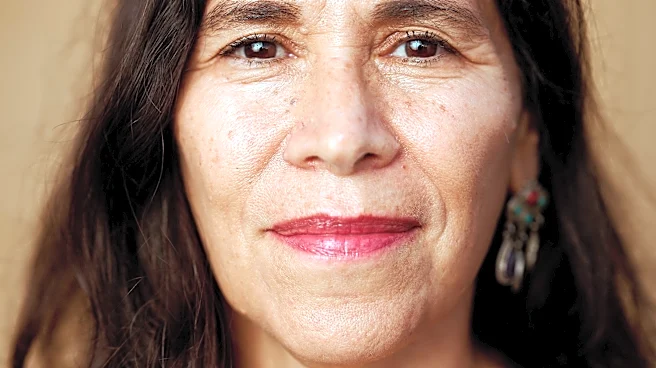
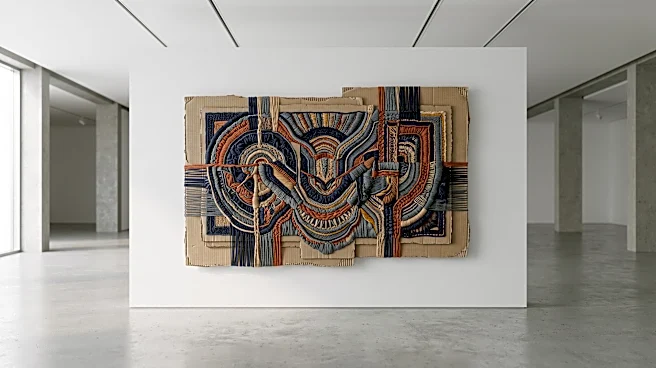
Chilean artist, activist, and poet Cecilia Vicuña has opened her exhibition, 'The Dream of Water: Quipu of Encounters Maricunga,' at the Museum of Contemporary Art (MOCA). The exhibition features a nearly 30-foot textile sculpture, 'Parina Quipu' (2026),
which originated from her work in Chile's Salar de Maricunga, a high-altitude salt flat in the Atacama Desert. This project, commissioned as part of MOCA’s inaugural Eric and Wendy Schmidt Environment and Art Prize, addresses the environmental threats posed by lithium mining in the ancestral territory of the Indigenous Colla people. Vicuña collaborated with microbiologist Cristina Dorador and Indigenous leaders to highlight the impact of lithium extraction on scarce water supplies and the unique microbial communities in the region. The exhibition also includes a five-channel film installation, 'Salar de Maricunga Quipu de Encuentro' (2026), which documents these journeys and the ecological concerns. Vicuña emphasizes the importance of collective creation and listening, drawing parallels between the water scarcity issues in Chile and those faced in Los Angeles.
Why It's Important?
This exhibition is significant as it brings critical environmental and Indigenous sovereignty issues to a prominent U.S. cultural institution. By showcasing the devastating effects of lithium mining on water resources and Indigenous lands in Chile, Vicuña's work raises awareness among American audiences about the global consequences of resource extraction, particularly for minerals vital to technologies like electric car batteries. The exhibition underscores the interconnectedness of environmental degradation, Indigenous rights, and global consumption patterns. It also highlights the role of art as a powerful medium for activism and education, encouraging dialogue about sustainable practices and corporate responsibility. The project's collaborative nature, involving scientists, activists, and Indigenous leaders, demonstrates a model for interdisciplinary approaches to complex environmental challenges, potentially influencing public discourse and policy considerations regarding resource management and environmental justice in the U.S. and beyond.
What's Next?
In May, Cecilia Vicuña plans to extend her 'quipu of encounters' to Los Angeles, inviting Indigenous leaders, artists, scientists, and water defenders from across the city. This initiative aims to connect the struggles over water scarcity and sovereignty in Maricunga with similar issues faced in the L.A. region. The specific format of these future encounters will be shaped by the participants' interactions and their responses to the local environment, including rivers, rocks, and wildlife. This continuation of her project suggests an ongoing effort to foster dialogue and collective action on water-related environmental challenges, potentially leading to new collaborations and increased local awareness. The exhibition at MOCA will likely continue to draw visitors, further disseminating its message and encouraging engagement with environmental and Indigenous rights issues.
Beyond the Headlines
Vicuña's work delves into deeper implications beyond immediate environmental concerns, touching upon the ethical dimensions of resource consumption and the cultural significance of Indigenous knowledge systems. Her emphasis on 'listening'—not just with ears but with the entire body—highlights a profound respect for the environment and traditional ways of knowing, contrasting with dominant industrial approaches. The concept of the 'quipu' as a living field of knowledge underscores the idea that interconnectedness is vital for survival, both ecologically and culturally. The exhibition implicitly challenges the anthropocentric view of nature, advocating for a more holistic understanding where humans are part of a larger, delicate ecosystem. This perspective encourages a re-evaluation of societal values, urging a shift from exploitation to reverence for the natural world and its diverse inhabitants, including microorganisms that hold keys to future human survival.