




What's Happening?
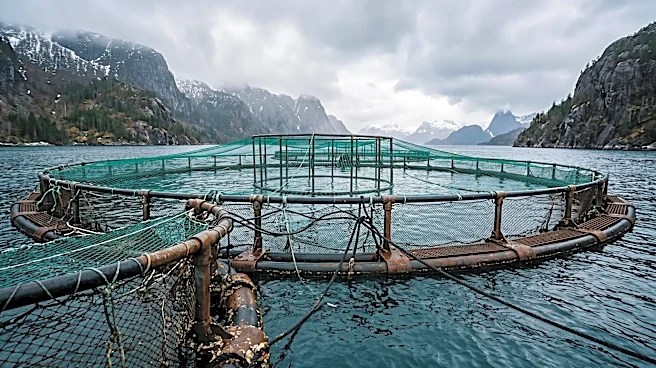
The Soil Association, a prominent organic certification body, has announced its withdrawal from the farmed salmon sector. This decision stems from concerns regarding high fish mortality rates and inadequate welfare and environmental standards within the industry.
While salmon farms can still pursue other certifications, they will no longer meet the higher standards previously represented by the Soil Association. This move highlights a growing scrutiny of aquaculture practices, particularly concerning the ethical treatment of farmed fish and the ecological impact of these operations. The Soil Association's decision reflects a commitment to upholding stringent organic principles, even if it means disengaging from a sector that fails to meet those benchmarks. This development could prompt other certification bodies and consumers to re-evaluate the sustainability and ethical implications of farmed salmon production.
Why It's Important?
This withdrawal by the Soil Association carries significant implications for the U.S. market, particularly for consumers who prioritize organically certified products and for businesses involved in the import and sale of farmed salmon. The U.S. imports a substantial amount of salmon, and a shift in international certification standards can influence consumer perception and demand. American retailers and food service providers that market 'organic' salmon will need to assess their supply chains and potentially seek alternative certifications or sources if they wish to maintain their organic claims. This could lead to increased costs for businesses as they adapt to new sourcing requirements or a potential decrease in the availability of salmon marketed under the Soil Association's organic label. Furthermore, the decision could spark a broader conversation among U.S. consumers about the true meaning of 'organic' in aquaculture and the environmental and welfare standards they expect from their food sources, potentially driving demand for more transparent and ethically produced seafood.
What's Next?
Following the Soil Association's withdrawal, the farmed salmon industry will likely face pressure to address the issues of high fish mortality and welfare standards. Other organic certification bodies may review their own criteria, potentially leading to a broader re-evaluation of aquaculture practices globally. For U.S. consumers and businesses, the immediate next step will involve understanding which certifications remain credible and how this change impacts the availability and labeling of 'organic' salmon. Retailers may need to update their product descriptions and marketing materials to reflect the absence of Soil Association certification. In the long term, this could catalyze innovation within the aquaculture industry towards more sustainable and humane farming methods, or it could lead to a divergence in standards, with some producers opting for less stringent certifications while others strive for higher, independently verified ethical and environmental benchmarks.
Beyond the Headlines
The Soil Association's decision transcends a mere change in certification; it underscores a fundamental tension between industrial-scale food production and genuine sustainability and animal welfare. This move highlights the ethical complexities inherent in 'organic' labeling, particularly when applied to animal agriculture where intensive farming practices can conflict with the spirit of organic principles. It also brings to light the power of certification bodies to influence market practices and consumer choices, acting as gatekeepers of ethical and environmental standards. This development could encourage a deeper societal reflection on the environmental footprint of seafood consumption and the ethical responsibilities of producers and consumers alike. It may also fuel the growth of alternative protein sources or more localized, sustainable aquaculture models that can genuinely meet high welfare and environmental standards.