
What's Happening?
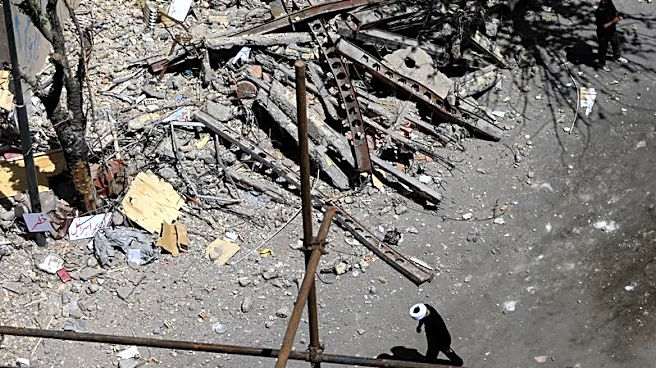
The article discusses Iran's long-standing involvement in global terrorism, highlighting the 1994 bombing of the AMIA Jewish community center in Buenos Aires, which resulted in 85 civilian deaths. This
attack, allegedly carried out by Hezbollah with Iranian support, exemplifies Iran's history of targeting 'soft targets' far from its borders. The piece reflects on the enduring impact of this event and the challenges faced by Argentina in prosecuting those responsible. Despite recent indictments of Iranian and Lebanese suspects, including high-ranking officials, the pursuit of justice has been marred by corruption and incompetence. The article also touches on Iran's broader strategy of plausible deniability in supporting terrorist activities worldwide.
Why It's Important?
The significance of this story lies in its illustration of Iran's persistent threat to global security and the challenges in holding it accountable. The AMIA bombing serves as a reminder of Iran's capability and willingness to conduct attacks far from its borders, targeting civilians. This has implications for international relations, particularly for countries like the U.S. and Argentina, which have been directly affected by Iran's actions. The ongoing struggle for justice in Argentina highlights the difficulties in prosecuting state-sponsored terrorism, which can undermine international legal systems and embolden other state actors to engage in similar activities without fear of repercussions.
What's Next?
The future steps involve continued efforts by Argentina and international bodies to hold the perpetrators accountable, despite the challenges posed by Iran's refusal to extradite suspects. The recent indictments may lead to trials in absentia, but the effectiveness of such measures remains uncertain. Additionally, the international community must consider strategies to deter Iran's support for terrorism, potentially through diplomatic pressure or sanctions. The situation also calls for a reassessment of global counter-terrorism strategies to address state-sponsored terrorism more effectively.
Beyond the Headlines
Beyond the immediate legal and political implications, the story raises questions about the cultural and historical factors that enable state-sponsored terrorism. Iran's actions are rooted in a radical ideology that has persisted since the Islamic Revolution, driven by hostility towards Israel and the West. This ideology not only fuels terrorism but also complicates diplomatic efforts to engage with Iran. The case also highlights the role of international organizations like Interpol in addressing transnational crimes, emphasizing the need for stronger global cooperation to combat terrorism.