


What's Happening?
The community of McClure in Dickenson County, Virginia, has undergone significant industrial transformations, evolving from a prosperous lumber town to a center for coal-related businesses. Initially, the W. M. Ritter Lumber Company established major
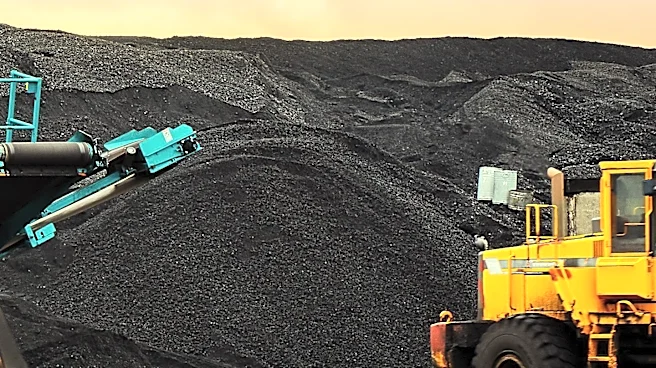
sawmill facilities and a company town in McClure around 1917-1919, employing hundreds and supporting a residential community. However, as timber resources diminished, Ritter began dismantling its operations around 1940-1946, leading to economic decline and population reduction. The town's revival was spearheaded by residents like Kenneth V. Herndon, a former field auditor for Ritter, who founded the McClure Lumber and Builders Supply Company. This initiative, coupled with the establishment of an Erwin Supply Company branch and Clinchfield Coal Corporation's central repair facilities, shifted McClure's economic base towards the burgeoning coal industry. The repair operation alone employed over 100 skilled workers, servicing Clinchfield's mining activities throughout the region, and natural gas development further diversified the local economy.
Why It's Important?
McClure's industrial evolution highlights the economic vulnerabilities and resilience of Appalachian communities heavily reliant on single natural resources. The initial prosperity brought by the W. M. Ritter Lumber Company demonstrates the significant impact large-scale resource extraction can have on regional development, creating employment and infrastructure. However, the subsequent decline underscores the impermanence of such industries and the critical need for economic diversification. The community's successful transition to a coal-centric economy, driven by local initiative and the establishment of new businesses, illustrates the adaptive capacity of towns facing industrial shifts. This case study is important for understanding regional economic development strategies, particularly in areas with finite natural resources, and the role of local leadership in fostering community survival and revitalization. The shift also reflects broader historical trends in Appalachia, where coal often replaced timber as the dominant industry.
What's Next?
The historical account concludes in the mid-1950s with McClure having successfully transitioned to a coal-dependent economy. While the immediate 'What's Next' from the source is historical, the long-term implications for such communities often involve continued cycles of resource dependence and potential future economic challenges as industries evolve. The 1983 McClure No. 1 Mine disaster, mentioned later in the source, serves as a stark reminder of the inherent dangers and human costs associated with heavy industry, particularly coal mining. This event would have undoubtedly led to increased scrutiny of mine safety regulations and operational procedures, potentially influencing future mining practices and community safety initiatives. For McClure, the ongoing challenge would be to maintain economic stability while addressing the social and environmental impacts of its new industrial focus.
Beyond the Headlines
The story of McClure extends beyond mere industrial shifts, revealing deeper implications for community identity, social cohesion, and cultural heritage. The efforts of individuals like Julia Herndon in rebuilding community life, including the McClure Methodist Church and local schools, demonstrate the profound importance of social infrastructure in sustaining a town through economic hardship. The community's collective action, from organizing garbage collection to funding school athletic programs, illustrates a powerful sense of local ownership and resilience. Furthermore, McClure's connection to bluegrass legends Carter and Ralph Stanley highlights how industrial landscapes can simultaneously foster rich cultural traditions. This dual narrative of economic struggle and cultural flourishing underscores the complex tapestry of Appalachian life, where the pursuit of livelihoods often intertwines with the preservation of unique cultural forms and community bonds, even in the face of industrial transformation and tragedy.