

What's Happening?
Treasury Secretary Scott Bessent has pressed Chinese Vice Premier He Lifeng to "fully and immediately" implement China's commitments under the Busan Agreement. This comes as the U.S. and China have agreed to extend their bilateral trade truce, which includes
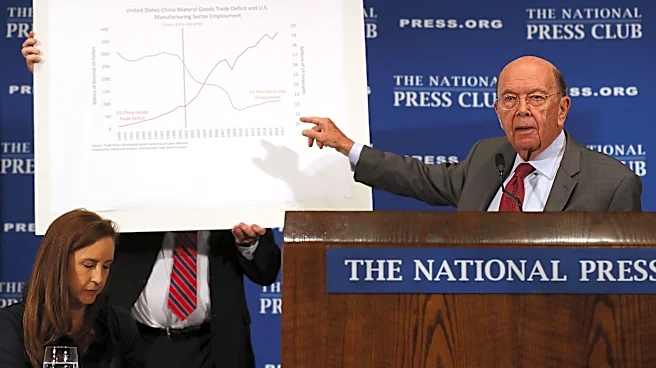
a pause on tit-for-tat tariff measures and deferred rare earth export curbs, until January 10. The extension was formalized by China's Ministry of Commerce and the U.S. Department of Commerce's Bureau of Industry and Security (BIS) regarding the suspension of the Affiliates Rule. Despite the extension, Secretary Bessent and U.S. Trade Representative Jamieson Greer have expressed concerns about China's adherence to its pledges, particularly concerning agricultural purchases and critical minerals.
Why It's Important?
The extension of the U.S.-China trade truce and the ongoing pressure from Treasury Secretary Bessent for China to fulfill its commitments are critical for maintaining stability in global trade relations. China's role as a dominant producer of rare earths and other critical minerals means that its export policies have significant implications for U.S. industries, particularly those in technology and defense. Failure by China to fully implement its commitments could disrupt supply chains, increase costs for U.S. businesses, and potentially reignite trade tensions. Conversely, successful adherence to the agreement could foster a more predictable and stable trade environment, benefiting both economies and global markets. The situation also highlights the broader strategic competition between the two nations over critical resources and technological dominance.
What's Next?
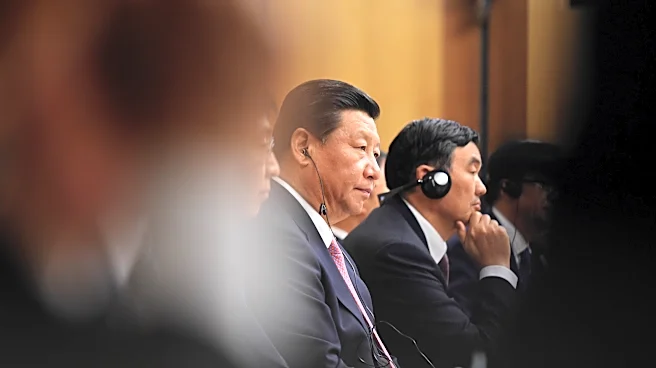
The extended trade truce is set to expire on January 10, which will be a critical juncture for U.S.-China trade relations. Ahead of this deadline, President Trump and President Xi are expected to meet on the sidelines of the Asia-Pacific Economic Cooperation (APEC) summit, providing an opportunity for high-level discussions on these trade issues. The U.S. government, including the Treasury and the White House, will continue to track China's implementation of its Busan commitments. The future of the Affiliates Rule, which expands export control licensing requirements, will also be determined around the January 10 deadline. The incoming Democratic-controlled Congress may also exert pressure for stricter controls on China's access to U.S. technology, potentially influencing future trade policy decisions.
Beyond the Headlines
The ongoing trade negotiations and the extension of the truce between the U.S. and China reflect a complex geopolitical dynamic that extends beyond economic considerations. The U.S. emphasis on China's commitments regarding critical minerals underscores national security concerns related to supply chain vulnerabilities and technological independence. The broader context includes competition in areas like artificial intelligence and advanced manufacturing, where access to rare earths is crucial. The U.S. government's efforts to ensure fair trade practices and intellectual property protection are part of a long-term strategy to maintain its economic and technological leadership. The outcome of these discussions will not only shape bilateral trade but also influence global economic governance and the future of international cooperation.