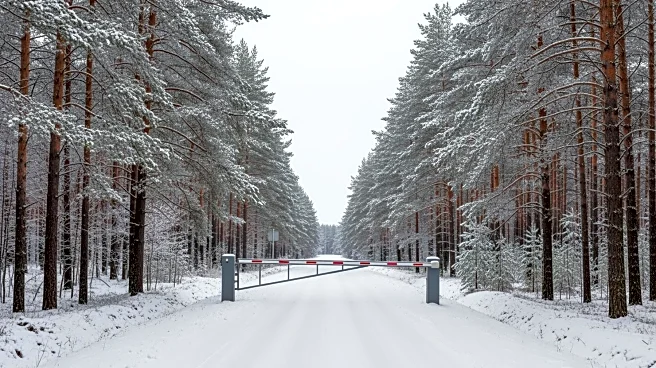

What's Happening?
The Canada Border Services Agency (CBSA) announced the termination of the Remote Area Border Crossing (RABC) Program, effective September 2026. This program allowed U.S. travelers to enter Canada through
remote northern crossings without reporting to a staffed port of entry. The new system will require travelers to check in via telephone or report to a designated site. The change aims to enhance border integrity and align with U.S. customs procedures. Approximately 11,000 people, mostly Americans, use RABC permits annually. The decision has raised concerns among U.S. lawmakers about its impact on tourism and small businesses reliant on cross-border traffic.
Why It's Important?
The termination of the RABC Program could significantly impact cross-border travel and commerce between the U.S. and Canada. The new reporting requirements may deter travelers, affecting tourism and small businesses in border communities. The change reflects a broader trend towards stricter border controls and alignment with international customs procedures. U.S. lawmakers have expressed concerns about the potential negative effects on local economies and are seeking to address these issues with Canadian authorities. The decision underscores the importance of cross-border cooperation and the need to balance security with economic interests.
What's Next?
As the new system is implemented, stakeholders, including local businesses and Indigenous communities, will need to adapt to the changes. The CBSA plans to consult with these groups to determine the locations of new telephone reporting sites. U.S. lawmakers may continue to engage with Canadian officials to mitigate the impact on border communities. The transition period until September 2026 provides time for travelers and businesses to adjust, but ongoing dialogue will be essential to address any challenges that arise. The outcome of these discussions could influence future border policies and cooperation between the two countries.