
What's Happening?
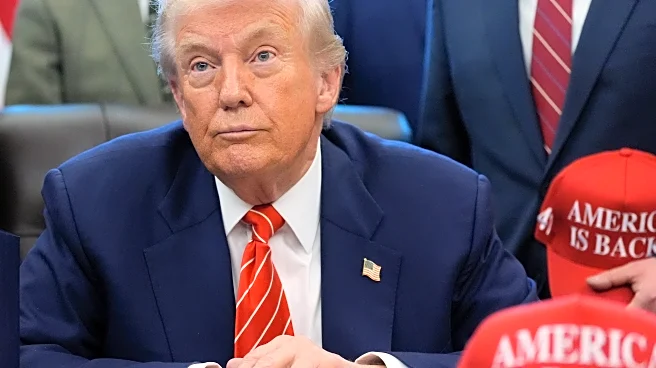
The Trump administration recently engaged in discussions with foreign ministers from Greenland and Denmark, as President Trump continues to express interest in acquiring the island nation. This development
was a focal point on the program 'Washington Week With The Atlantic,' where panelists discussed the implications of this foreign policy move. Despite President Trump's initial campaign focus on domestic issues such as economic reform and immigration control, the current administration's attention has shifted significantly towards international relations and military presence overseas. The panel included notable journalists such as Jonathan Karl from ABC News, David Sanger from The New York Times, and Nick Schifrin from PBS News Hour, who analyzed the potential motivations and consequences of the U.S.'s interest in Greenland.
Why It's Important?
The U.S. interest in Greenland represents a strategic geopolitical maneuver, potentially enhancing American influence in the Arctic region. This move could have significant implications for international relations, particularly with Denmark, which governs Greenland. The acquisition of Greenland could provide the U.S. with increased access to natural resources and strategic military positioning. However, it also raises questions about the U.S.'s diplomatic approach and its impact on existing alliances. The shift in focus from domestic to international issues under President Trump's administration highlights a broader strategy to assert U.S. power globally, which could affect international trade, security, and environmental policies.
What's Next?
The discussions between the U.S., Greenland, and Denmark are likely to continue, with potential diplomatic negotiations or proposals forthcoming. The international community, particularly European allies, will be closely monitoring these developments. Any formal bid or agreement regarding Greenland would require careful diplomatic handling to maintain positive relations with Denmark and other NATO allies. Additionally, domestic reactions within the U.S. could influence the administration's approach, as public opinion and political opposition may shape future policy decisions.
Beyond the Headlines
The interest in Greenland also underscores broader themes of territorial expansion and resource acquisition in contemporary geopolitics. This situation may prompt discussions about sovereignty, indigenous rights, and environmental stewardship in the Arctic. The potential for increased U.S. military presence in the region could also lead to heightened tensions with other Arctic nations, such as Russia, which may view this as a strategic threat. The ethical considerations of such a territorial acquisition, including the impact on Greenland's local population and environment, will likely be subjects of ongoing debate.