








What's Happening?
Sterling Heights and Macomb County officials have revealed a new green infrastructure project along a 1.2-mile section of the Sterling Relief Drain, stretching from west of Ryan Road to Mound Road. This $1 million initiative involved 'daylighting' the drain,
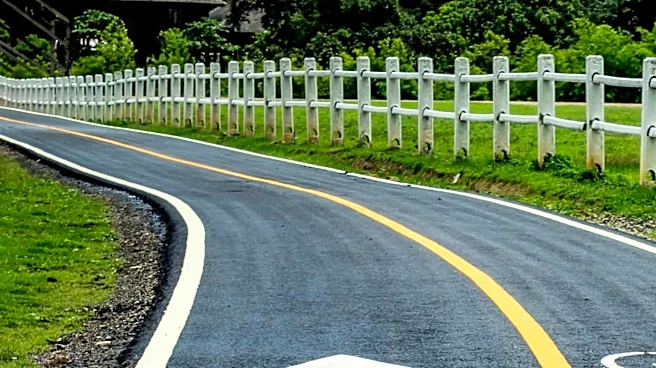
replacing old metal pipes with natural elements. Thousands of trees, bushes, perennials, and pollinators have been planted to reduce and filter stormwater, aiming to significantly decrease flooding in local homes and roadways. Macomb County Public Works Commissioner Candice Miller explained that the decision was made to 'let Mother Nature do her thing' by allowing natural filtration. The project also includes reconstructed manholes and modified inlets to prevent trash from entering the drain and to ensure stormwater runoff is filtered through native plantings. Acres of prairie grass now cover the relief drain, and areas previously mowed have been converted into pollinator fields. The project also features a new 3,000-linear-foot shared-use pedestrian path, connecting Nelson Park to Ryan Road, adding to Sterling Heights' non-motorized recreational trails.
Why It's Important?
This green infrastructure project is crucial for environmental protection and public well-being in Sterling Heights and the broader region. By naturally filtering stormwater, it helps remove excess nitrogen and phosphorus, which are major contributors to harmful algae blooms in the Great Lakes, including Lake St. Clair and the Detroit River. Sterling Heights City Councilman Henry Yanez emphasized the project's importance not just locally but for the entire state of Michigan. The reduction in flooding will protect homes and infrastructure, saving residents from potential damage and costs. The creation of a new hike/bike path provides a valuable recreational amenity, promoting outdoor activity and enhancing the quality of life for residents. This dual-purpose approach demonstrates an innovative way to address environmental challenges while simultaneously improving community resources. The funding for this project came from a collaborative effort, including the National Fish and Wildlife Foundation, Macomb County Public Works Office, the City of Sterling Heights, the Sterling Relief Drain drainage board, and grant support from DTE and Consumers Energy, highlighting successful inter-agency cooperation.
What's Next?
The newly planted trees and shrubs are expected to be fully established in the fall, further enhancing the project's effectiveness in stormwater management and habitat restoration. Officials anticipate that the project will lead to a significant reduction, if not elimination, of flooding in the area, as stated by County Commissioner Joseph Romano. The success of this initiative could serve as a model for future green infrastructure projects in other parts of Macomb County and Michigan, particularly given its positive impact on water quality in the Great Lakes system. The new hike/bike path is expected to become a popular amenity, and its integration into the city's recreational network will likely encourage more residents to utilize the area. Continued monitoring of the drain's water quality and flood control effectiveness will be essential to assess the long-term benefits of this natural approach.
Beyond the Headlines
This project represents a broader shift towards sustainable urban planning and environmental stewardship, recognizing the interconnectedness of local ecosystems with larger regional bodies of water like the Great Lakes. The 'daylighting' of the drain symbolizes a move away from purely engineered solutions to more natural, ecological approaches to infrastructure. It also highlights the increasing importance of pollinator habitats in urban and suburban areas, contributing to biodiversity and ecosystem health. The collaborative funding model involving federal, county, city, and private entities demonstrates a growing recognition that environmental challenges require diverse partnerships. Furthermore, the integration of recreational spaces within environmental projects underscores a holistic view of community development, where ecological health and public enjoyment are mutually reinforcing. This initiative could inspire greater public engagement in local environmental efforts and foster a deeper appreciation for natural solutions to urban problems.