






What's Happening?
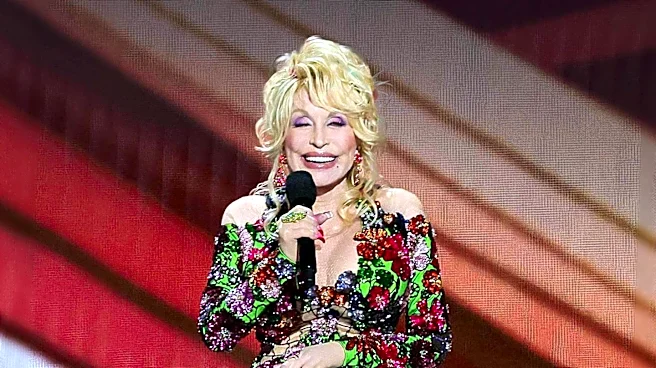
NPR's Planet Money has revisited the true story behind Dolly Parton's iconic song and movie, '9 to 5.' The episode delves into the origins of the anthem, highlighting its connection to a women's labor organization formed in Boston in 1973, also called
'9to5.' This group of secretaries advocated for better working conditions and fair treatment for women in clerical roles during a period of significant workplace change between the 1960s and 1980s. The song and film captured the spirit of this movement, resonating with many who felt the lyrics reflected the realities of their working lives. The original episode, produced by Nick Fountain and James Sneed and edited by Mitra Kaboli, was updated by Sam Yellowhorse Kesler and engineered by Jimmy Keeley, with Alex Goldmark as Planet Money’s executive producer.
Why It's Important?
The story behind '9 to 5' is important because it underscores a pivotal moment in U.S. labor history and women's rights. The song became an anthem for working women, articulating their frustrations and aspirations for workplace equality. Its continued relevance highlights persistent issues regarding fair labor practices, gender equity, and the challenges faced by employees. The '9to5' movement and the cultural impact of Parton's work demonstrate how art can serve as a powerful tool for social commentary and change. Revisiting this history provides context for ongoing discussions about workplace conditions, pay equity, and the evolution of labor laws in the U.S., reminding audiences of the progress made and the work that still needs to be done in achieving true workplace fairness.
What's Next?
While the NPR segment is a retrospective, its re-airing could reignite conversations about workplace equality and the historical context of women's labor movements in the U.S. It may encourage listeners to reflect on current labor conditions and the ongoing relevance of the issues raised by the '9to5' movement. The story could inspire new generations to engage with labor activism and advocate for improved workplace standards. Additionally, the enduring popularity of '9 to 5' suggests that its themes continue to resonate, potentially leading to further cultural analyses, documentaries, or artistic interpretations that explore the evolution of work and gender roles in American society. The discussion serves as a reminder that the fight for equitable workplaces is a continuous process.
Beyond the Headlines
The '9 to 5' narrative extends beyond a simple song or movie; it represents a significant cultural touchstone in the U.S. that reflects the evolving dynamics of gender, power, and labor. The song's 'catchy yet depressing' nature, as described, highlights the often-overlooked emotional toll of workplace inequalities. It brings to light the ethical considerations of corporate responsibility and the societal impact of unfair labor practices. The story also illustrates the power of collective action, as seen with the '9to5' organization, in driving social change. This historical context is crucial for understanding contemporary movements for workers' rights and gender equality, emphasizing that many current struggles have deep roots in past activism. The enduring legacy of '9 to 5' serves as a cultural mirror, prompting continuous self-reflection on American values concerning work and fairness.