


What's Happening?
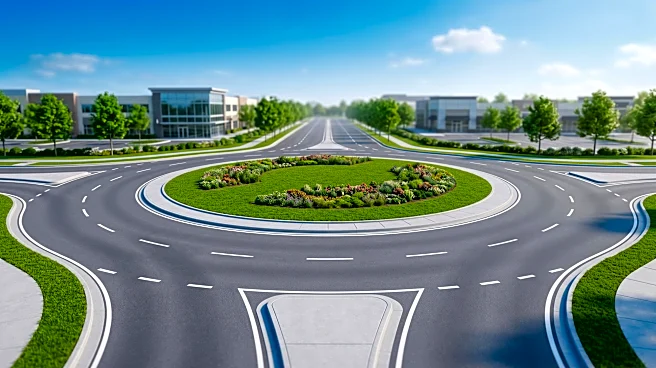
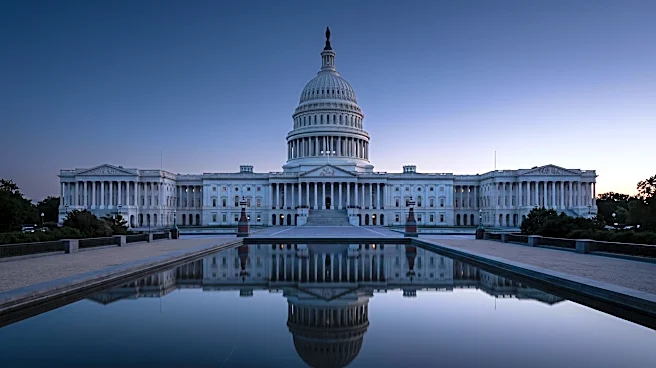
U.S. Senators Todd Young (R-IN) and Gary Peters (D-MI) have introduced the Visionary Intersections Modernization Act (S. 5407). This bipartisan legislation aims to enhance traffic safety and provide more funding options for roundabout construction by
amending the Surface Transportation Block Grant program to specifically include roundabouts. Senator Young highlighted Indiana's leadership in roundabout construction, citing Carmel, Indiana, where roundabouts have led to an 80% reduction in injury accidents and a 40% overall decrease in accidents. The bill seeks to offer communities nationwide greater flexibility in securing federal funding for infrastructure projects that prioritize safety. Companion legislation has also been introduced in the House of Representatives by U.S. Representatives Laura Gillen (D-NY) and Rob Bresnahan (R-PA).
Why It's Important?
This legislation is important because it addresses a critical aspect of U.S. infrastructure: traffic safety and efficiency. By making roundabouts eligible for Surface Transportation Block Grant funding, the bill could significantly increase their adoption across the country. Roundabouts are proven to reduce severe accidents and improve traffic flow, which has direct implications for public safety and economic productivity. Reduced accidents mean fewer injuries and fatalities, lowering healthcare costs and societal burdens. Improved traffic flow can decrease commute times, fuel consumption, and vehicle emissions, contributing to economic efficiency and environmental benefits. The bipartisan support for this bill underscores a shared recognition of the need for modern, effective infrastructure solutions that can benefit communities nationwide.
What's Next?
The Visionary Intersections Modernization Act (S. 5407) will now proceed through the legislative process in the U.S. Senate. Its companion legislation in the House of Representatives will also undergo review. The bill has garnered support from several key organizations, including Advocates for Highway and Auto Safety, the American Society of Civil Engineers, the American Traffic Safety Services Association, and the Safe Routes Partnership. This broad support from industry and safety advocates could facilitate its passage. If enacted, communities across the U.S. would gain increased access to federal funding for roundabout construction, potentially leading to a nationwide increase in these traffic safety improvements. The next steps involve committee hearings, potential amendments, and votes in both chambers of Congress.
Beyond the Headlines
Beyond the immediate impact on traffic safety and funding, this legislation reflects a broader shift in infrastructure planning towards data-driven solutions. The emphasis on roundabouts, backed by statistics showing significant reductions in accidents, highlights a move away from traditional intersection designs that may be less efficient or safe. This initiative could also encourage further innovation in urban planning and traffic management, prompting communities to explore other proven methods for improving infrastructure. Furthermore, the bipartisan nature of the bill suggests a potential for collaboration on other infrastructure challenges, demonstrating that common ground can be found on issues directly impacting the daily lives of Americans, fostering a more proactive approach to national infrastructure development.