



What's Happening?
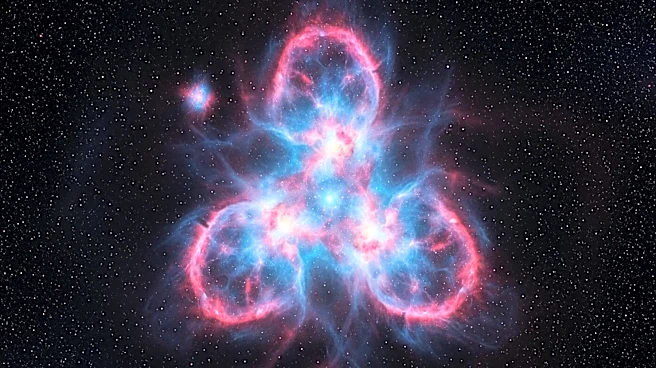
The Hubble Space Telescope has revisited the Trifid Nebula, a stellar nursery located approximately 5,000 light years away, to celebrate its 36th anniversary. The new images reveal subtle changes in the nebula's cloud of gas and dust since Hubble's first
observation in 1997. Notably, the expansion of a jet of plasma, periodically ejected by a forming star, demonstrates the dynamic nature of astronomical objects. These observations highlight the evolution of celestial bodies over relatively short astronomical timescales, providing valuable data for understanding star formation and nebular dynamics.
Why It's Important?
The Hubble Space Telescope's continued observations of the Trifid Nebula contribute to the scientific understanding of star formation and the lifecycle of nebulae. By documenting changes over decades, astronomers can study the processes that govern the birth and development of stars. This research is crucial for advancing astrophysics and enhancing our knowledge of the universe. Additionally, the Hubble's ability to capture detailed images of distant celestial phenomena underscores the importance of space telescopes in expanding human knowledge and inspiring future generations of scientists.