

What's Happening?
Captain Charles Edward Moody, a prominent figure in Great Lakes maritime history, commanded various vessels for over six decades, beginning his career at age 14 in 1864. His extensive service included sailing vessels, early steamers, Milwaukee harbor
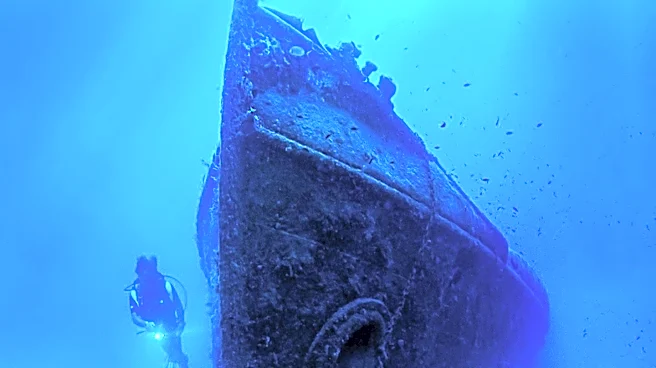
tugs, Flint & Pere Marquette Railway steamers, railroad carferries, steel bulk freighters, and whalebacks. Moody is particularly noted for his 26 seasons as master of the passenger whaleback Christopher Columbus, an unusual vessel designed for excursion service. On June 30, 1917, while departing Milwaukee for Chicago with 413 passengers, the Christopher Columbus was involved in a tragic accident. Heavy rains had swollen the Milwaukee River, creating strong currents that complicated the steamer's maneuver. As the vessel swung stern-first, it struck supports beneath a water tank on the Yahr-Lange Drug Company dock, causing the tank to collapse onto the ship. The impact crushed upper decks and the pilothouse, resulting in 16 fatalities and over 20 serious injuries. An investigation attributed the accident primarily to the unusually strong river current, with no criminal negligence established, though greater caution by the captains was suggested.
Why It's Important?
Captain Moody's career exemplifies the transformative period of Great Lakes shipping from the mid-19th to the early 20th century, showcasing the evolution from sail to steam, and the development of specialized vessels like carferries and whalebacks. His long tenure and diverse experience highlight the demanding nature of maritime professions and the continuous adaptation required by technological advancements. The 1917 Christopher Columbus accident serves as a stark reminder of the inherent dangers of maritime operations, even for experienced captains in familiar waters. This incident led to significant loss of life and property, prompting investigations that, while not finding criminal negligence, underscored the critical importance of judgment and caution in challenging environmental conditions. Such events historically contribute to the refinement of navigation protocols, vessel design, and safety regulations, influencing future maritime practices on the Great Lakes and beyond.
What's Next?
Following the 1917 accident, the Christopher Columbus underwent repairs costing approximately $25,000 and returned to service in 1918, with Captain Moody resuming command. He continued as captain for many more years, retiring from the Goodrich Transportation Company on March 1, 1930, at the age of 79, marking 66 years of Great Lakes service. The accident did not end his career, but it likely reinforced the need for vigilance in maritime operations. The Christopher Columbus itself made its final voyage in 1932 and was eventually dismantled. Captain Moody's legacy, including his reputation for skilled ship handling and his role in the accident, continued to be part of Milwaukee waterfront folklore. His career trajectory and the incident itself contribute to the historical record of Great Lakes shipping, informing future generations about the challenges and advancements in maritime transportation.
Beyond the Headlines
Captain Moody's story extends beyond a mere recounting of voyages and an accident; it offers a window into the social and economic fabric of the Great Lakes region during a period of rapid industrialization. His progression from a young sailor to a master of diverse vessels reflects the opportunities and demands of a burgeoning maritime industry. The Christopher Columbus, as the only passenger whaleback ever built, represents a unique chapter in naval architecture, blending innovative design with the practicalities of passenger excursion. The anonymous poem 'The Passenger Hog' illustrates the cultural impact of such vessels and their captains on waterfront communities, capturing the everyday interactions and rivalries within the bustling port environment. This narrative underscores the human element in technological progress, where individual skill, experience, and occasional tragedy shape the course of industrial development and public perception.