






What's Happening?
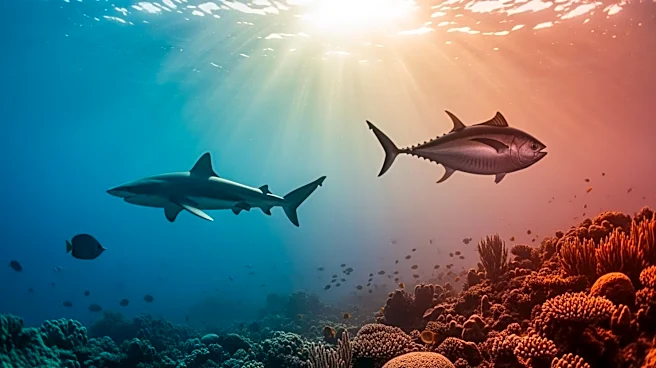
A study conducted by Trinity College Dublin has found that warm-bodied fish such as sharks and tuna are at risk of overheating due to rising ocean temperatures. These species, which include the Great White and basking sharks, burn nearly four times more
energy than cold-blooded fish, leading to increased energy demands. As ocean temperatures rise, these fish face a 'double jeopardy' of overheating and reduced food availability. The study highlights the unique challenges faced by 'mesothermic' fish, which can retain body heat, allowing them to swim faster and hunt more effectively. However, this adaptation also makes them more vulnerable to temperature increases, potentially shrinking their habitable range.
Why It's Important?
The findings underscore the vulnerability of key marine predators to climate change, which could have significant implications for marine ecosystems. As these species are pushed closer to their physiological limits, their survival and distribution could be severely impacted. This could lead to shifts in marine biodiversity and affect the balance of oceanic food chains. The study also highlights the broader impact of climate change on marine life, emphasizing the need for conservation efforts to protect these species and maintain ecological balance.
What's Next?
The study suggests that as global temperatures continue to rise, the suitable habitats for these fish will shrink, especially during warmer months. This could force species like the Atlantic bluefin tuna to adapt by diving deeper or increasing heat loss, though these measures may not suffice if surface waters continue to warm. The research calls for further studies to predict how marine ecosystems will shift and to develop strategies to mitigate the impact of climate change on these vital species.
Beyond the Headlines
The study provides a new method to predict which marine species are most at risk in a warming world, offering insights into the physical constraints faced by these predators. It also draws parallels with past climate shifts, suggesting that current changes could have similar devastating effects on marine giants. The research highlights the urgent need for action to address climate change and protect marine biodiversity.