





What's Happening?
Lightdox has secured the world sales rights for the documentary 'My Home of Wind and Sand,' which is set to premiere at the Zurich Film Festival. The film, directed by Patrick Wally, chronicles over a decade in the life of Najla Mohamed Lamin, a women's
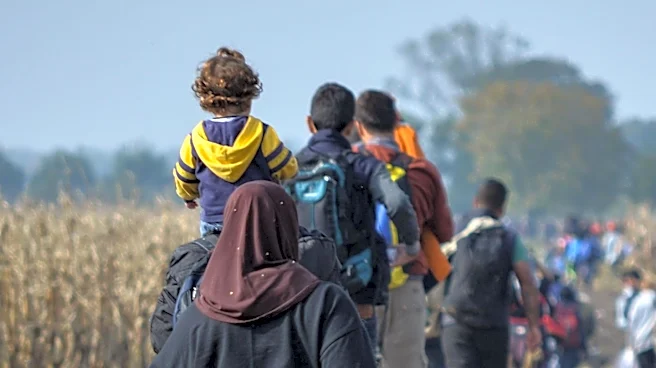
rights, human rights, and climate activist born in a Sahrawi refugee camp in Algeria. Lamin has been a vocal advocate for the self-determination of Western Sahara, a region whose unresolved status has led to over 200,000 Sahrawis living in refugee camps in the Algerian desert since 1975. The documentary aims to portray the human impact of this geopolitical conflict through Lamin's personal experiences, showing her efforts to build spaces for women and children and her commitment to peaceful resistance despite the ongoing lack of a political resolution. The United Nations officially recognizes Western Sahara as a 'Non-Self-Governing Territory,' and the Polisario Front, representing the Indigenous Sahrawi people, continues to seek self-determination with support from Algeria.
Why It's Important?
The acquisition of 'My Home of Wind and Sand' by Lightdox and its premiere at an international film festival bring significant global attention to the long-standing and often overlooked conflict in Western Sahara. This documentary is crucial for raising awareness in the U.S. and other Western nations, where the plight of the Sahrawi people has largely been ignored. By focusing on Najla Mohamed Lamin's personal story, the film humanizes a complex geopolitical issue, making it more accessible and relatable to a broader audience. Increased awareness can pressure international bodies and governments, including the U.S., to re-evaluate their stance and potentially engage more actively in seeking a resolution for the Sahrawi people's right to self-determination. The film highlights the enduring consequences of colonial legacies and the challenges faced by indigenous populations in asserting their rights, underscoring the need for sustained diplomatic efforts and humanitarian support for those living in prolonged displacement.
What's Next?
Following its world premiere at the Zurich Film Festival, 'My Home of Wind and Sand' will have public screenings, and Lightdox will manage its global distribution. The film's exposure at international festivals and subsequent sales could lead to wider viewership, potentially influencing public opinion and policy discussions regarding Western Sahara. The involvement of figures like Nobel Peace Prize nominee Greta Thunberg, who is expected to attend the premiere and participate in a conversation with Lamin, further amplifies the film's potential impact. This increased visibility may encourage more robust engagement from international organizations and governments, including the U.S., to address the humanitarian crisis in the Sahrawi refugee camps and to support a political resolution that respects the Sahrawi people's right to self-determination. The film's narrative, which explores the meaning of pacifism and agency in seemingly intractable situations, could also inspire further advocacy and support for peaceful conflict resolution.
Beyond the Headlines
The documentary 'My Home of Wind and Sand' delves into the deeper ethical and cultural dimensions of the Western Sahara conflict by presenting it through the lens of an individual's lived experience. It challenges the common tendency to reduce geopolitical conflicts to abstract political symbols, instead emphasizing the human cost and the resilience of those directly affected. The film's focus on Najla Mohamed Lamin's efforts to build community and advocate for peaceful resistance, even as armed conflict resumes, highlights the enduring power of individual agency in the face of seemingly insurmountable historical and political obstacles. This narrative can foster a more nuanced understanding of the conflict, moving beyond political rhetoric to acknowledge the cultural identity, aspirations, and daily struggles of the Sahrawi people. It also implicitly critiques the international community's prolonged inaction, suggesting a moral imperative for greater engagement and a re-evaluation of the principles of self-determination and human rights in post-colonial contexts.