




What's Happening?
In the first quarter of 2026, electric vehicles (EVs) accounted for 33% of the automotive market share in France, marking a significant increase from 22.9% in the same period the previous year. The growth was primarily driven by battery electric vehicles (BEVs),
which saw a 50% year-on-year increase in sales. The Tesla Model Y emerged as the best-selling BEV, with 10,670 units sold. Other popular models included the Renault 5 and the Renault Scenic. Despite the overall decline in auto sales by 2.5% year-on-year, the EV segment continues to expand, with mild hybrids and hybrid electric vehicles (HEVs) also gaining traction as transitional technologies.
Why It's Important?
The rising market share of EVs in France is indicative of a broader shift towards sustainable transportation solutions. This trend is significant for the automotive industry as it adapts to changing consumer preferences and regulatory pressures aimed at reducing carbon emissions. The success of models like the Tesla Model Y highlights the competitive landscape of the EV market, where innovation and affordability are key drivers. The transition to electric vehicles also has implications for energy policy, infrastructure development, and environmental goals in France and across Europe. As the market continues to evolve, stakeholders in the automotive and energy sectors will need to address challenges related to production capacity, charging infrastructure, and consumer education.
What's Next?
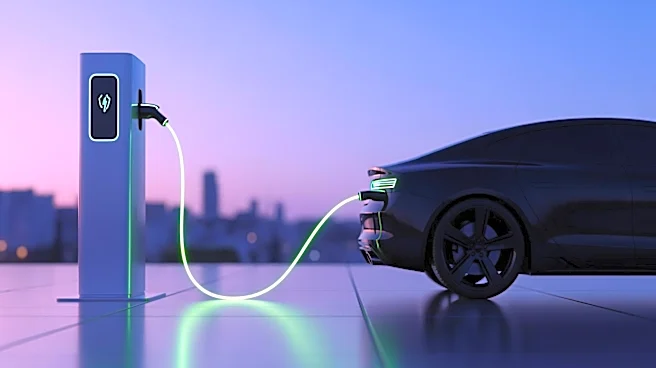
As the EV market in France continues to grow, manufacturers are likely to increase their focus on developing more affordable and efficient models to capture a larger share of the market. The French government may also implement additional incentives to encourage the adoption of electric vehicles, aligning with broader environmental objectives. Infrastructure development, particularly the expansion of charging networks, will be crucial to support the increasing number of EVs on the road. The ongoing transition presents opportunities for innovation in battery technology and renewable energy integration, which could further accelerate the shift towards sustainable transportation.