
What's Happening?
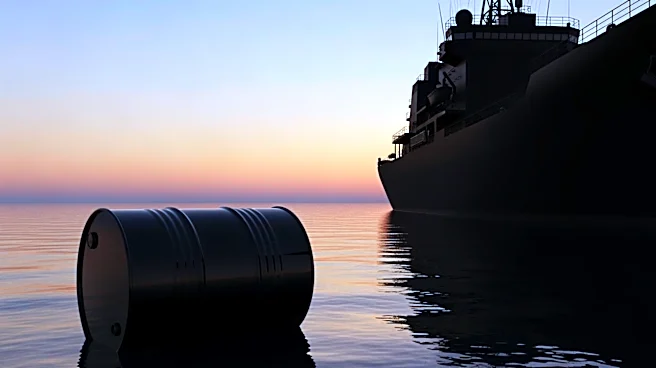
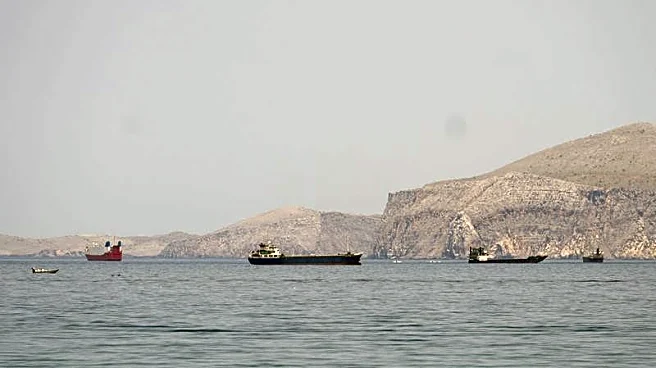
A U.S. naval blockade of Iranian ports has significantly reduced Iran's oil exports, causing a buildup of crude oil on tankers as Iranian storage facilities reach capacity. The blockade has led to a dramatic
decrease in the number of Iranian crude carriers leaving the Gulf of Oman, with exports dropping by over 80% compared to previous months. The blockade is part of broader U.S. efforts to curb Iran's oil revenue amidst ongoing geopolitical tensions. Despite a temporary sanctions waiver granted by the U.S. to cool oil prices, the blockade has resulted in a substantial disruption of global oil supply, contributing to rising oil prices.
Why It's Important?
The U.S. naval blockade on Iran is a critical factor in the current global oil market, as it exacerbates supply constraints and contributes to higher oil prices. This situation impacts not only Iran's economy, which relies heavily on oil exports, but also global markets, as the blockade affects oil exports from other Gulf countries. The disruption in supply has led to increased prices for gasoline, diesel, and jet fuel, affecting consumers and industries worldwide. The blockade also highlights the geopolitical tensions in the region and the potential for further economic and political ramifications.
What's Next?
The continuation of the blockade could force Iran to reduce oil production due to limited storage capacity, potentially leading to further supply constraints in the global market. The U.S. and its allies may face diplomatic challenges as they navigate the consequences of the blockade on international relations and global oil supply. Additionally, Iran may seek alternative routes or methods to circumvent the blockade, which could lead to further geopolitical tensions.