



What's Happening?
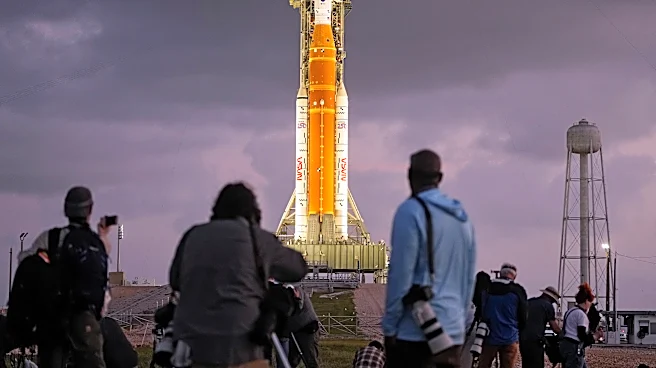
NASA's Artemis II mission has successfully reached orbit around Earth with its four astronauts aboard the Orion capsule. The crew will spend approximately 25 hours in orbit, conducting system tests and early flight operations. This phase includes practicing
rendezvous and docking maneuvers, which are crucial for future lunar missions. The mission experienced a brief communication disruption when the spacecraft switched between tracking satellites, but the issue was quickly resolved. The rocket's upper stage has fired again, boosting the Orion capsule into a higher orbit. The crew is preparing to ignite Orion's main engine to propel the spacecraft toward the moon, a journey of about 248,000 miles.
Why It's Important?
The successful orbit of Artemis II marks a significant milestone in NASA's efforts to return humans to the moon. This mission is a critical step in testing the systems and operations necessary for future lunar exploration. The ability to perform docking maneuvers and manage communication systems are essential skills for the astronauts, ensuring mission success and safety. The Artemis program aims to establish a sustainable human presence on the moon, which could pave the way for future Mars exploration. The mission's progress is closely watched by the scientific community and space enthusiasts, as it represents advancements in space technology and exploration capabilities.
What's Next?
Following the orbit phase, the Artemis II crew will ignite Orion's main engine to leave Earth's orbit and begin their journey to the moon. This phase will test the spacecraft's ability to travel long distances in space and ensure all systems are functioning correctly. The mission will provide valuable data and experience for NASA as it prepares for Artemis III, which aims to land astronauts on the lunar surface. The success of Artemis II will influence future mission planning and international collaborations in space exploration.