

What's Happening?
Former Israel Navy chief, Vice Admiral (res.) Eliezer 'Chayni' Marom, has criticized Iran for making strategic errors during recent conflicts, particularly highlighting a direct attack on Israel from Iranian territory. Marom described this as a 'grave
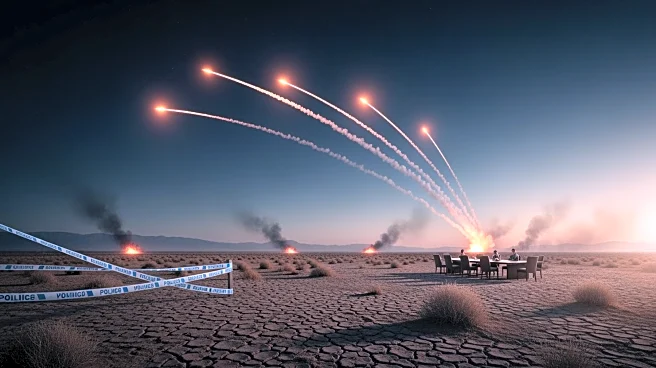
strategic mistake' that has reshaped regional alignments and exposed weaknesses in Iran's threat posture. The attack, which involved over 300 drones and missiles, was largely intercepted by Israel and its partners, diminishing Iran's deterrence capabilities.
Why It's Important?
This critique from a high-ranking former military official underscores the shifting dynamics in Middle Eastern geopolitics. Iran's actions have forced regional actors to reassess their alliances and strategies, potentially leading to new coalitions or conflicts. The situation also highlights the limitations of Iran's military capabilities, which could influence future diplomatic and military engagements in the region. The broader implications for U.S. foreign policy include reassessing its alliances and strategies in the Middle East, particularly in relation to Iran's influence.
What's Next?
The ongoing debate in Israel regarding Iran's capabilities and the potential for escalation if diplomatic efforts fail is likely to continue. Marom's comments suggest that the next phase of this conflict may depend on the success or failure of negotiations. The possibility of a leadership change in Iran, potentially leading to a military-led government, adds another layer of complexity to the situation. Monitoring these developments will be crucial for understanding the future of Middle Eastern geopolitics.