




What's Happening?
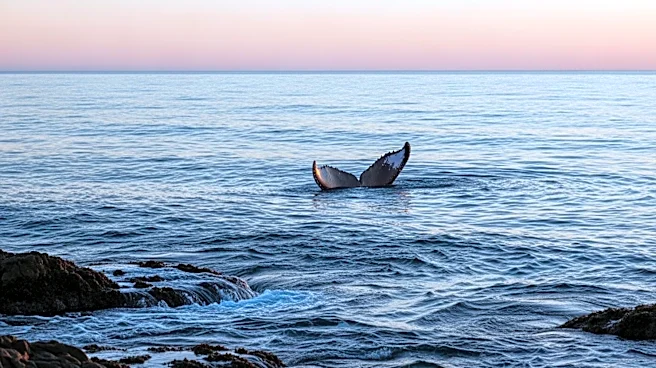
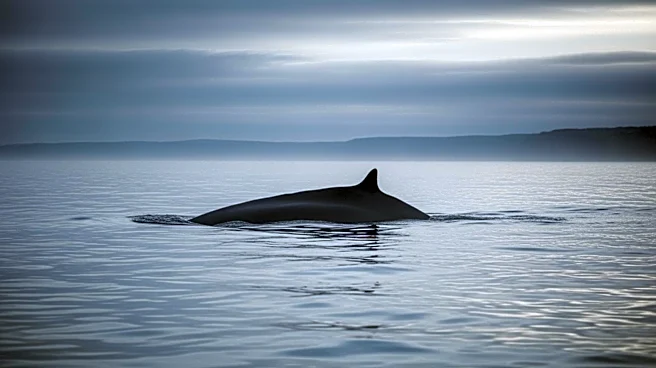
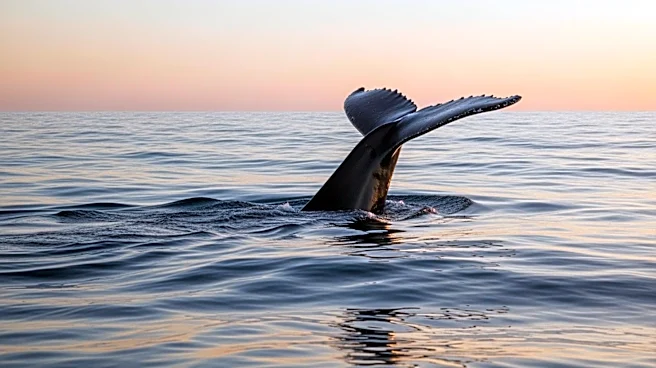
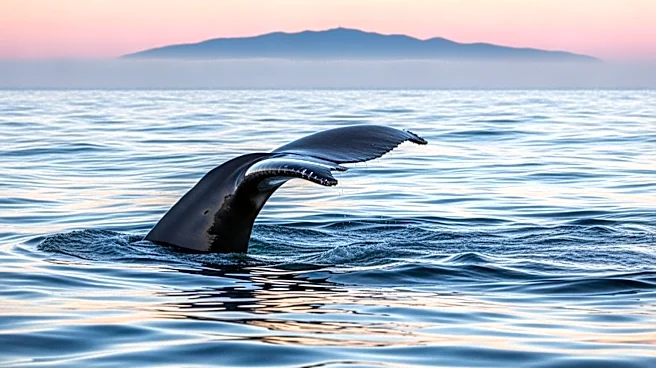
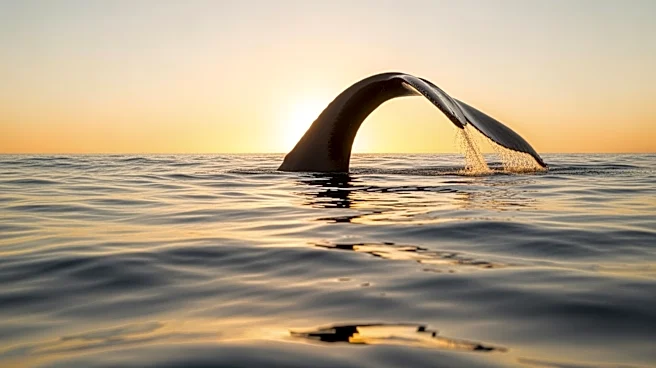
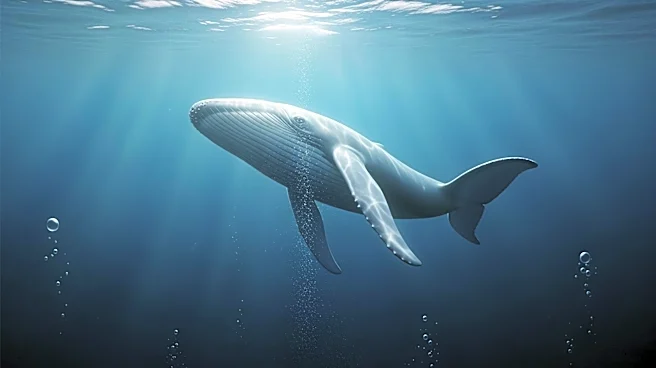
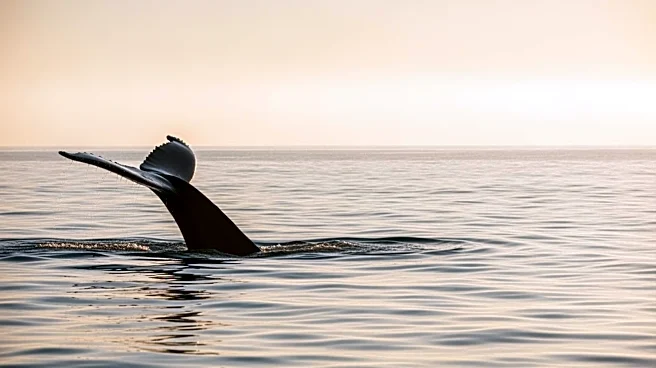
Danish authorities have confirmed that a dead humpback whale found off the coast of Denmark is the same whale that was previously stranded off Germany's Baltic coast, known as 'Timmy'. The whale had been the subject of a controversial rescue operation
after being stranded on a sandbank in Germany since March 23. Despite efforts to free it, including a privately funded rescue attempt, the whale was released into the North Sea on May 2 but was later found dead. The Danish Environmental Protection Agency confirmed the whale's identity through a tracking device attached to its dorsal fin. The whale's plight had captured significant media attention in Germany, with public interest remaining high.
Why It's Important?
The confirmation of the whale's identity highlights the challenges and ethical considerations involved in wildlife rescue operations. The case of 'Timmy' underscores the difficulties in rescuing large marine animals and the potential stress such operations can cause. It also raises questions about the balance between human intervention and natural processes. The public interest in the whale's story reflects broader concerns about marine conservation and the impact of human activities on wildlife. The situation also illustrates the complexities faced by environmental agencies in managing public expectations and scientific advice.
What's Next?
There are currently no plans to remove the whale's carcass, but authorities have warned the public to keep a safe distance due to potential health risks and the possibility of the carcass exploding as it decomposes. The incident may prompt further discussions among environmental and marine life experts about best practices for future rescue operations. It could also lead to increased scrutiny of private rescue efforts and their effectiveness. The case may influence policy decisions regarding marine wildlife management and conservation strategies in the region.
Beyond the Headlines
The story of 'Timmy' the whale brings attention to the broader issue of human impact on marine environments. It highlights the need for improved strategies to address the challenges faced by marine wildlife, particularly in areas heavily trafficked by shipping and other human activities. The incident may also serve as a catalyst for public education campaigns about marine conservation and the importance of protecting ocean ecosystems. Additionally, it raises ethical questions about the extent to which humans should intervene in natural processes, especially when the outcomes are uncertain.