






What's Happening?
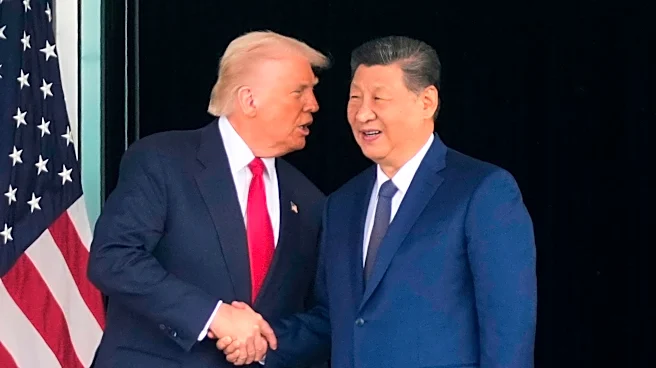
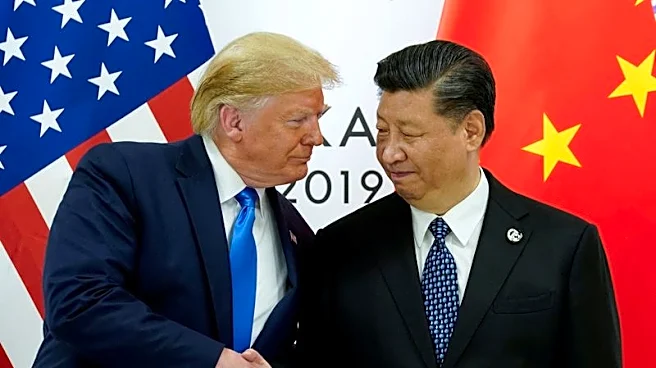
The United States and China are exploring a managed trade mechanism that could lead to reduced tariffs on approximately $30 billion worth of non-sensitive goods. This initiative, discussed during a high-stakes summit between U.S. President Donald Trump
and Chinese President Xi Jinping, aims to enhance economic cooperation without compromising national security. The proposed 'Board of Trade' mechanism, introduced by U.S. Trade Representative Jamieson Greer, focuses on setting numerical trading targets in non-strategic sectors. This approach marks a shift from previous demands for China to alter its state-directed economic model. The discussions also involve potential tariff reductions on U.S. energy and agricultural products, which have been subject to disruptive tariffs by China.
Why It's Important?
The potential tariff reductions could significantly impact U.S.-China trade relations, which have seen a decline in recent years. A managed trade mechanism could help stabilize and possibly increase trade volumes between the two nations, benefiting industries such as energy and agriculture in the U.S. By focusing on non-sensitive goods, the agreement aims to avoid conflicts over national security concerns. This development could also serve as a model for future trade negotiations, emphasizing cooperation over confrontation. The reduction in tariffs could provide economic relief to U.S. exporters facing high tariffs in China, potentially boosting their competitiveness in the Chinese market.
What's Next?
As the U.S. and China continue to negotiate, the specifics of the goods included in the tariff reduction framework remain to be defined. Future meetings between President Trump and President Xi, as well as discussions among economic officials, will be crucial in finalizing the details of the agreement. The potential establishment of a 'Board of Investment' to address investment issues is also on the agenda, although significant progress in this area is not expected in the near term. Stakeholders in both countries, including lawmakers and industry groups, will likely monitor the negotiations closely, given the potential implications for domestic industries and international trade dynamics.