






What's Happening?
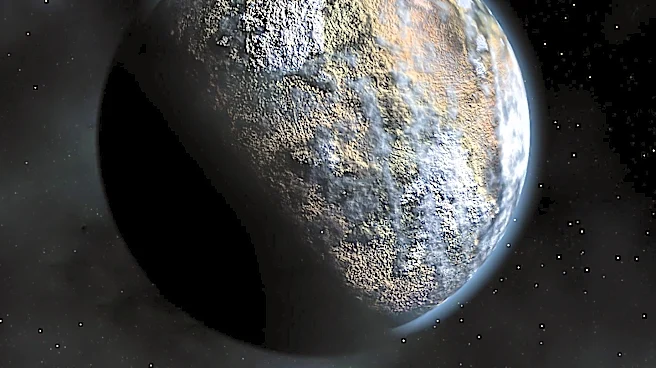
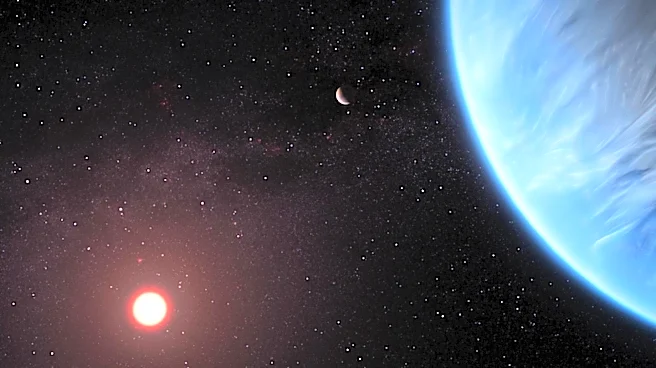
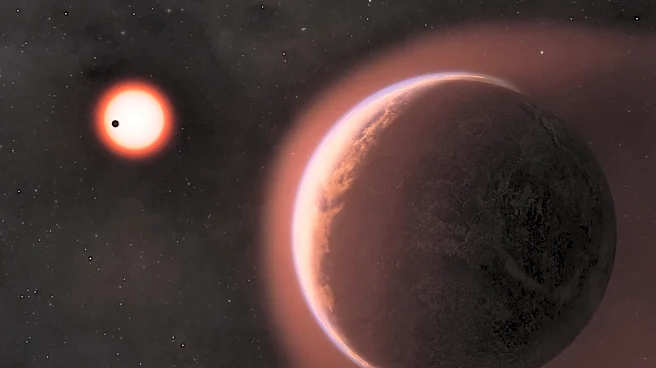
Researchers have identified the first atmosphere on an Earth-like rocky planet, LHS 1140b, located in the habitable zone of a distant star. This planet, 48 light-years from Earth, orbits a red star smaller and cooler than the Sun. The atmosphere, primarily
composed of helium, represents a significant step towards finding life beyond Earth. While helium alone cannot support life, the presence of an atmosphere on a rocky planet in the habitable zone is a promising sign. The discovery suggests that conditions similar to Earth could exist elsewhere in the universe, potentially supporting life.
Why It's Important?
The discovery of an atmosphere on LHS 1140b is a major milestone in the search for extraterrestrial life. It provides evidence that Earth-like conditions may exist beyond our solar system, increasing the likelihood of finding life-supporting environments on other planets. The presence of an atmosphere is crucial for stabilizing surface temperatures and protecting potential life forms from harmful radiation. This finding enhances our understanding of planetary atmospheres and their evolution, offering new insights into the potential for life beyond Earth. The study of LHS 1140b's atmosphere could inform future explorations of other rocky planets in habitable zones.