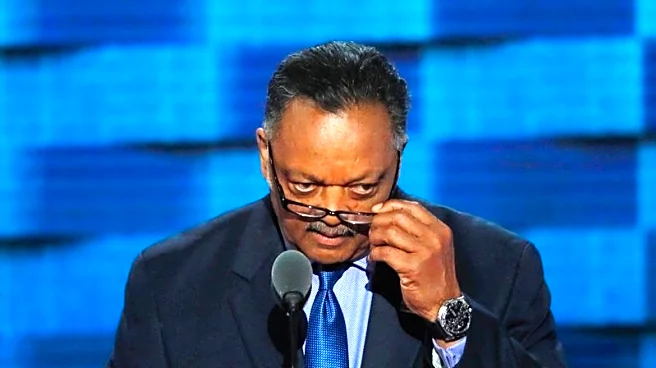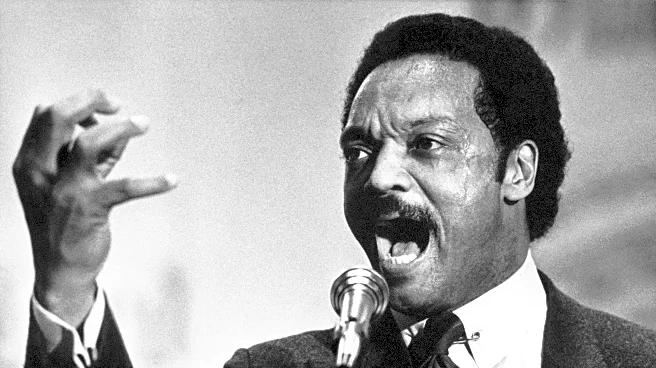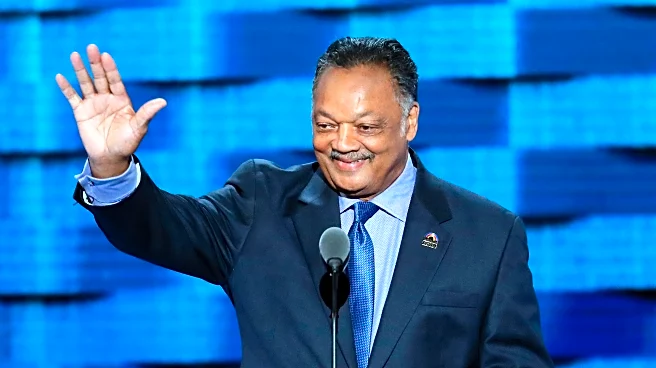




What's Happening?
The office of House Speaker Mike Johnson has denied a request from the family of the Rev. Jesse Jackson to have his remains lie in honor at the US Capitol. The request was turned down based on the precedent that the honor is typically reserved for former
presidents, military personnel, and select officials. This decision comes amidst a backdrop of political and social significance, as Jesse Jackson is a prominent civil rights leader known for his extensive work in advocating for racial equality and social justice. The denial of this request has sparked discussions about the criteria and traditions associated with lying in honor at the Capitol, a practice that holds symbolic importance in recognizing individuals who have made significant contributions to the nation.
Why It's Important?
The decision to deny Jesse Jackson the honor of lying in state at the Capitol highlights ongoing debates about who is deemed worthy of such recognition. Jackson's contributions to civil rights and his influence on American society are significant, and the denial may be seen as a reflection of the political and cultural divides in the country. This event underscores the broader conversation about how the nation honors its leaders and activists, and who gets to be included in these prestigious traditions. The implications of this decision could affect public perception of the current political leadership and their stance on civil rights issues, potentially influencing voter sentiment and engagement in future elections.
What's Next?
While the immediate decision has been made, the broader conversation about the criteria for lying in honor at the Capitol is likely to continue. Civil rights groups and supporters of Jesse Jackson may advocate for a reevaluation of the criteria, pushing for more inclusive recognition of individuals who have made significant contributions outside of traditional political or military roles. This could lead to discussions in Congress about potential changes to the guidelines governing such honors. Additionally, public and political reactions to this decision may influence future requests and decisions regarding who is granted the honor of lying in state at the Capitol.