





What's Happening?
Bangladesh is grappling with severe river erosion, a harsh reality for communities living along its riverbanks. The passage highlights the plight of individuals like Meherjan, who lost her family, arable land, and home to the erosion of the Jamuna River.
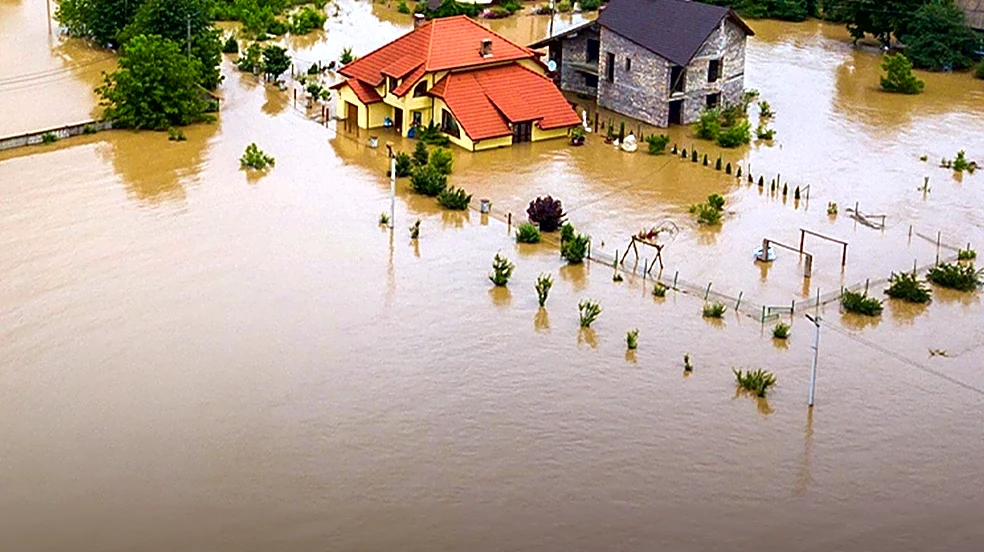
This phenomenon, particularly prevalent during the monsoon season, threatens numerous villages and displaces an estimated 100,000 people annually. The 'greedy Jamuna,' as described in the text, has shattered the dreams and happiness of many, leading to poverty and disease. The country, being a land of rivers, experiences significant bank overflow and erosion from mighty rivers such as the Jamuna, Padma, and Meghna. The text emphasizes that river erosion is a major consequence of climate change, and without prompt action to adapt, the number of affected individuals like Meherjan will continue to rise.
Why It's Important?
The widespread river erosion in Bangladesh carries significant humanitarian, economic, and environmental implications. The displacement of 100,000 people annually creates a massive internal migration challenge, straining urban resources and exacerbating poverty. The loss of arable land directly impacts food security and the agricultural economy, which is vital for a largely agrarian nation. The destruction of homes and livelihoods leads to social instability, increased vulnerability to disease, and psychological trauma for affected communities. This situation underscores the disproportionate impact of climate change on developing nations, even though they may contribute less to global emissions. The continuous cycle of loss and displacement hinders long-term development efforts and perpetuates a cycle of poverty, making it a critical issue for international aid and climate adaptation strategies.
What's Next?
To mitigate the devastating effects of river erosion, prompt actions are required to adapt to climate change. This includes implementing measures such as planting trees along riverbanks and constructing embankments to stabilize the land. These efforts would aim to reduce the rate of erosion and protect vulnerable communities. Additionally, there is a need for comprehensive disaster preparedness and response mechanisms to support displaced populations and provide them with alternative livelihoods. International cooperation and funding will be crucial to assist Bangladesh in developing and implementing these adaptation strategies. Without sustained intervention, the number of people rendered homeless and impoverished by river erosion is projected to increase, necessitating ongoing humanitarian aid and long-term development planning to build resilience in affected regions.
Beyond the Headlines
The 'Greed of the Mighty Rivers' narrative extends beyond a mere environmental disaster; it delves into the profound human cost of climate change and environmental degradation. The story of Meherjan symbolizes the loss of not just physical assets but also family, dreams, and a sense of stability. This highlights the ethical dimension of climate change, where the actions of industrialized nations contribute to the suffering of vulnerable populations in other parts of the world. The term 'greedy Jamuna' personifies the destructive power of nature, but it also implicitly critiques the human systems that fail to protect communities from such forces. This situation calls for a re-evaluation of global responsibilities and the need for equitable climate justice, where those most affected by climate change receive adequate support and resources to adapt and rebuild their lives. It also underscores the cultural significance of rivers in Bangladesh, which are both life-giving and life-threatening, shaping the 'fate' of its people.