
What's Happening?
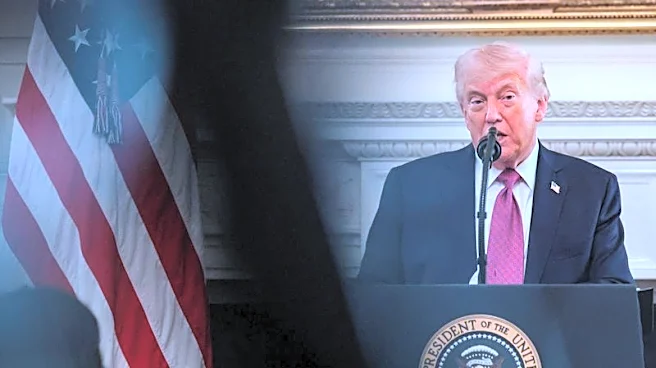
Iranian officials have publicly emphasized national unity following President Trump's comments about internal divisions in Tehran. Trump cited these alleged divisions as a reason for extending the U.S.
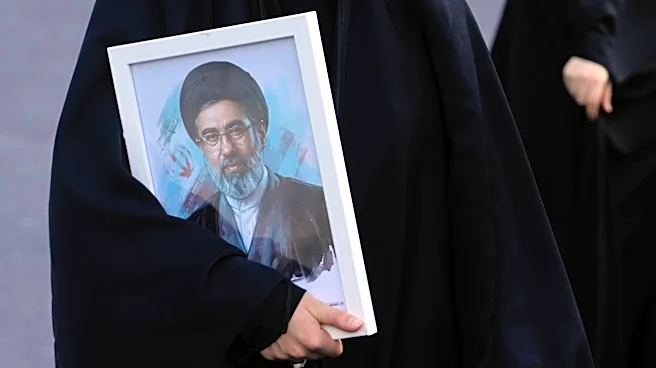
ceasefire with Iran. In a Truth Social post, Trump described a lack of clear leadership in Iran, which he claimed delayed their ability to negotiate effectively. In response, Iranian leaders, including President Masoud Pezeshkian and Parliament Speaker Mohammad Bagher Ghalibaf, have rejected these claims, asserting that the country is united under the supreme leader. This exchange highlights the ongoing diplomatic tensions between the U.S. and Iran.
Why It's Important?
The situation underscores the complex geopolitical dynamics between the U.S. and Iran. Trump's comments and the subsequent Iranian response reflect the strategic use of public narratives to influence international perceptions. The extension of the ceasefire, while intended to provide time for negotiations, also maintains a tense status quo in the region. The U.S.'s control over the Strait of Hormuz and the naval blockade on Iranian ports are significant factors in this diplomatic standoff. The outcome of these negotiations could have far-reaching implications for regional stability and international relations.
What's Next?
The continuation of the ceasefire suggests that both the U.S. and Iran are seeking a diplomatic resolution, albeit with differing public narratives. The U.S. will likely continue to press for a unified Iranian negotiating position, while Iran will aim to project strength and cohesion. The potential for a lasting agreement remains uncertain, with both sides needing to navigate internal and external pressures. The international community will be watching closely for any shifts in policy or rhetoric that could signal a breakthrough or further escalation.