






What's Happening?
A recent poll conducted by the Financial Times reveals that a significant majority of American voters believe the war with Iran was not worth the economic cost. The poll indicates that 58% of respondents view the $67 billion expenditure requested by the White
House to cover war expenses as excessive, given the objectives achieved. Additionally, 40% of voters feel that the United States is in a weaker position post-conflict, while only 31% believe the country has emerged stronger. The poll also highlights skepticism towards the Memorandum of Understanding signed between the U.S. and Iran, with 66% of voters doubting its effectiveness in promoting peace in the Middle East. President Trump's approval ratings have dropped to 36%, and the Democratic Party appears to have a stronger footing heading into the upcoming midterm elections.
Why It's Important?
The poll's findings underscore a growing public discontent with the economic and strategic outcomes of the war with Iran. The perception that the war was not economically justified could influence public opinion and voter behavior in the upcoming elections, potentially impacting the political landscape. The skepticism towards the Memorandum of Understanding suggests a lack of confidence in current diplomatic efforts to stabilize the Middle East, which could affect future U.S. foreign policy decisions. President Trump's declining approval ratings and the Democratic Party's increased support may signal a shift in political power dynamics, influencing legislative priorities and governance strategies.
What's Next?
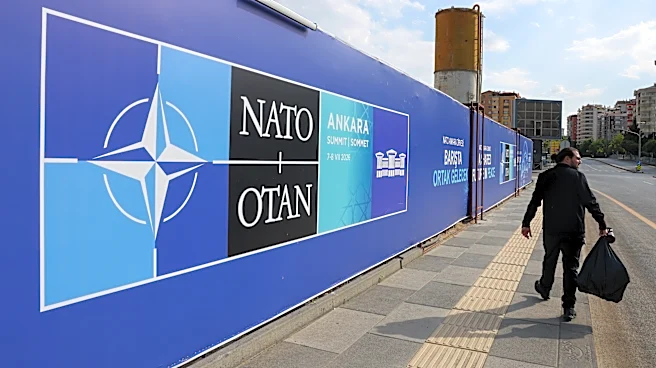
As the U.S. approaches the midterm elections, the poll results may prompt political parties to reassess their strategies and policy positions. The Democratic Party, with its current advantage, may focus on capitalizing on public dissatisfaction with the war's economic impact and the administration's foreign policy. Meanwhile, the Republican Party may need to address these concerns to maintain voter support. The ongoing debate over the U.S.'s role in NATO, highlighted by President Trump's recent criticisms, could also shape future defense and international relations policies. Stakeholders will likely continue to monitor public sentiment and adjust their approaches accordingly.