





What's Happening?
NASA's Swift Observatory, a premier space telescope that spent 22 years studying cosmic explosions, reentered Earth's atmosphere on Wednesday. The U.S. Space Force confirmed the observatory's reentry near Indonesia, having tracked its sinking orbit. This
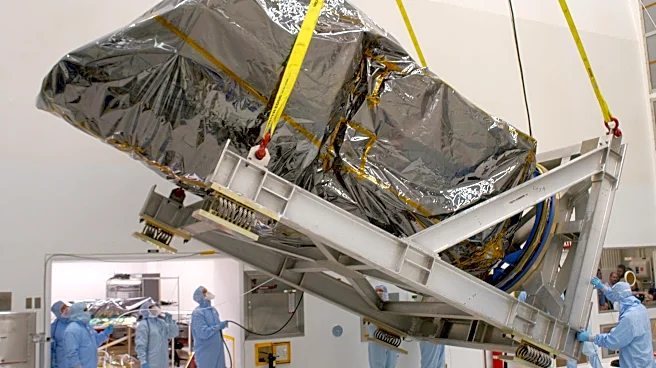
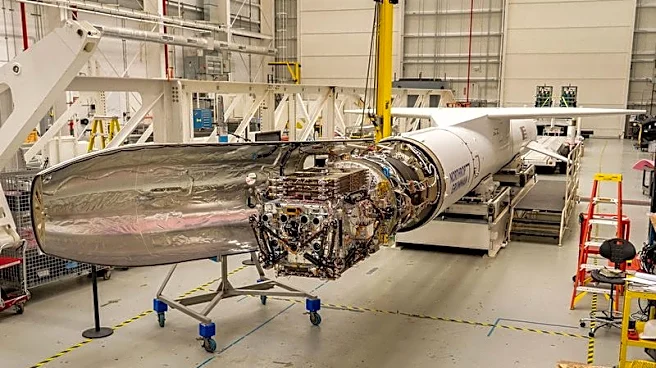
demise follows an unsuccessful rescue mission less than three months prior. The Swift Observatory's orbit deteriorated due to intense solar activity experienced over the past few years. NASA had contracted a private company, Katalyst Space, to develop an orbit-boosting effort. However, Katalyst Space's three-armed robotic craft encountered issues after its July launch and subsequently crashed in September, failing to prevent Swift's atmospheric reentry. It is not yet known how much of the 1.5-ton spacecraft burned up during reentry, though NASA anticipated some denser components would survive.
Why It's Important?
The reentry of the Swift Observatory marks the end of a highly successful mission that significantly advanced our understanding of gamma-ray bursts and exploding stars. Launched in 2004 with an expected two-year lifespan, Swift operated for 11 times longer than planned, observing thousands of cosmic events and serving as a crucial 'first responder' for other telescopes. Its loss represents a reduction in NASA's observational capabilities for these high-energy phenomena. This event also highlights the increasing challenge of managing space debris and the impact of solar activity on orbiting assets. The failed rescue attempt underscores the complexities and difficulties involved in extending the operational lives of aging spacecraft, even with advanced robotic technology. The incident also draws attention to the vulnerability of long-duration space missions to environmental factors like solar storms.
What's Next?
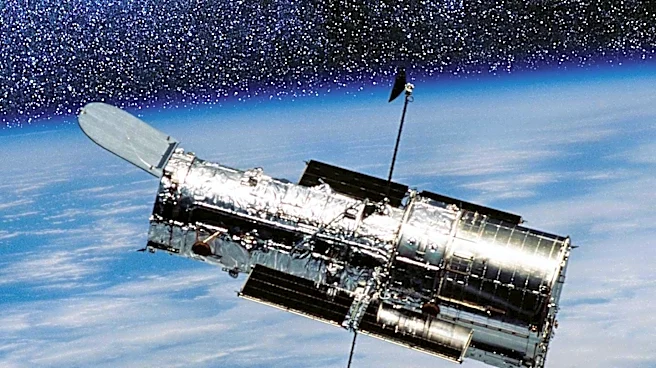
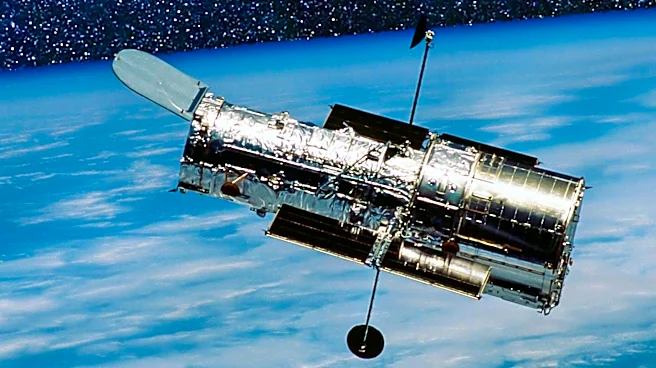
NASA is currently assessing industry interest in a potential rescue mission for another aging observatory, the Hubble Space Telescope, whose orbit is also being affected by solar storms. Hubble, launched in 1990, is projected to reenter Earth's atmosphere by the mid-2030s. Unlike the rushed effort for Swift, NASA has more time to explore options for Hubble, including boosting its orbit, upgrading its systems, or guiding it to a controlled reentry. Any such mission for Hubble would need to occur by 2032. The space agency is seeking input from private companies on the feasibility and methods for these interventions, emphasizing Hubble's continued scientific value. The lessons learned from Swift's demise, particularly regarding the challenges of orbital maintenance and rescue, will likely inform future strategies for preserving valuable space assets.
Beyond the Headlines
The Swift Observatory's reentry, alongside the ongoing concerns for the Hubble Space Telescope, underscores a growing challenge in space exploration: the end-of-life management for long-duration missions. As more satellites and telescopes are launched and age, the issue of orbital decay and controlled reentry becomes critical for preventing space debris and ensuring the safety of future space operations. This situation also highlights the evolving role of private companies in supporting government space initiatives, particularly in complex tasks like orbital servicing and debris mitigation. The scientific community will now need to adapt to the absence of Swift's unique capabilities, potentially relying more heavily on newer instruments or re-prioritizing observations. The incident serves as a stark reminder of the finite lifespan of even the most robust space technology and the continuous need for innovation in space asset management.