






What's Happening?
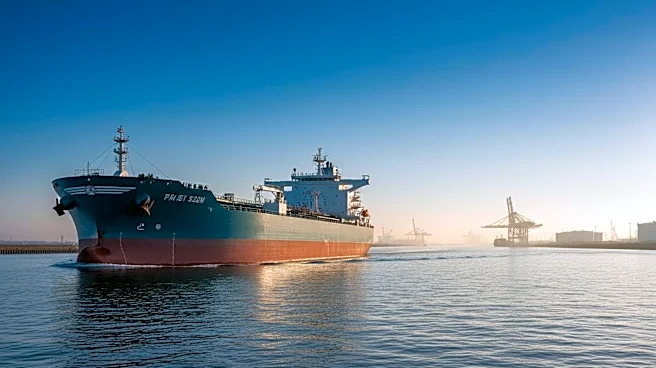
Oil prices have risen sharply after the U.S. Treasury Department revoked its authorization of Iranian oil sales. This decision comes in the wake of a series of attacks on tankers in the Strait of Hormuz, a critical chokepoint for global oil shipments.
The revocation is part of the U.S. government's response to these attacks, which have heightened tensions in the region and disrupted oil supply chains. The Strait of Hormuz is a vital passage for oil exports from the Middle East, and any disruption can have significant implications for global oil markets. The U.S. action is seen as a move to exert pressure on Iran amid ongoing geopolitical tensions.
Why It's Important?
The increase in oil prices has immediate economic implications, potentially affecting fuel costs and inflation rates globally. For the U.S., higher oil prices can lead to increased costs for consumers and businesses, impacting economic growth and consumer spending. The revocation of Iranian oil sales authorization is also a significant geopolitical maneuver, reflecting the U.S.'s strategic interests in the Middle East and its stance on Iran. This development could influence international relations and energy policies, as countries dependent on Middle Eastern oil may need to adjust their strategies. The situation underscores the interconnectedness of global energy markets and the potential for regional conflicts to have widespread economic repercussions.
What's Next?
The U.S. government's decision is likely to lead to further diplomatic and economic responses from Iran and other affected countries. The situation in the Strait of Hormuz will be closely monitored for any further disruptions or escalations. Oil market analysts and policymakers will be assessing the impact of these developments on global supply and demand dynamics. Additionally, there may be calls for increased security measures in the region to protect shipping lanes and ensure the stability of oil supplies. The U.S. and its allies may also engage in diplomatic efforts to de-escalate tensions and seek a resolution to the underlying conflicts.