



What's Happening?
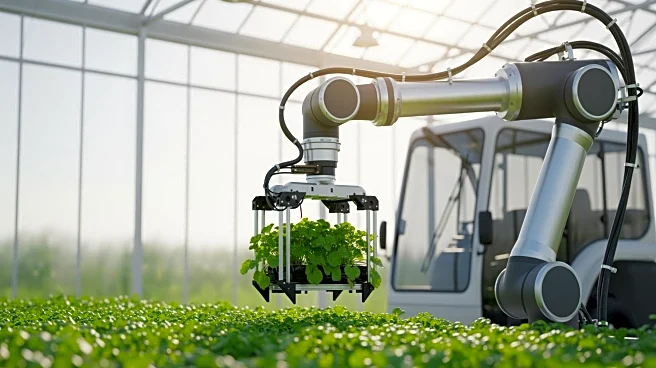
At a two-day international congress in Lucknow, experts discussed the transformative potential of Artificial Intelligence (AI) and robotics in agriculture. The event, organized by the Integral Institute of Agricultural Science and Technology (IIAST) in collaboration
with the Uttar Pradesh Council of Agricultural Research (UPCAR), focused on technology-led methods to enhance Indian agriculture under the Viksit Bharat vision. Attendees included academicians, scientists, policymakers, industry representatives, agri-entrepreneurs, and farmers. Minister of State for Horticulture, Agricultural Marketing, and Agricultural Foreign Trade Dinesh Pratap Singh emphasized the role of technology and horticulture in ensuring food security and agricultural growth. Prof Panjab Singh, Chancellor of Rani Lakshmi Bai Central Agricultural University, highlighted the challenges posed by climate change, water scarcity, and land degradation, suggesting AI-based farming as a solution.
Why It's Important?
The integration of AI and robotics in agriculture is crucial for addressing pressing issues such as climate change, resource scarcity, and the need for increased productivity. By adopting these technologies, the agricultural sector can reduce carbon emissions and improve efficiency, contributing to sustainable farming practices. This shift is significant for India, where agriculture plays a vital role in the economy and food security. The adoption of AI-driven methods could lead to more resilient farming systems, potentially benefiting farmers, consumers, and the environment. As India aims to strengthen its agricultural sector, technology will be a key driver in achieving these goals.
What's Next?
The congress is expected to foster collaboration among stakeholders to implement AI and robotics in agriculture. Future initiatives may include pilot projects, research collaborations, and policy development to support technology adoption. Stakeholders, including government agencies, academic institutions, and industry players, are likely to explore funding opportunities and partnerships to advance these technologies. The focus will be on creating frameworks that facilitate the integration of AI and robotics into existing agricultural practices, ensuring that farmers can access and benefit from these innovations.