

What's Happening?
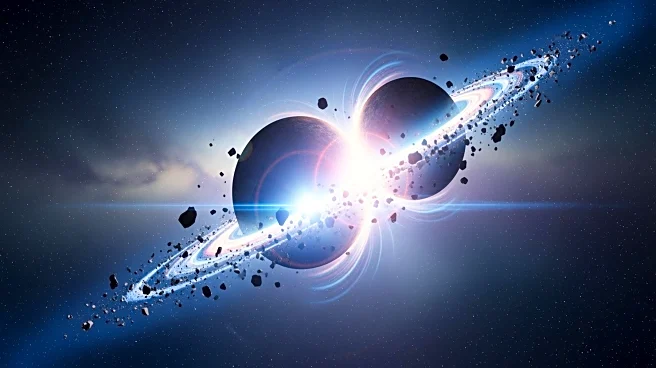
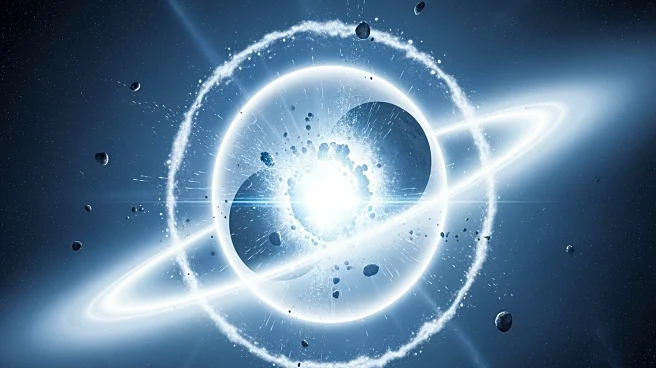
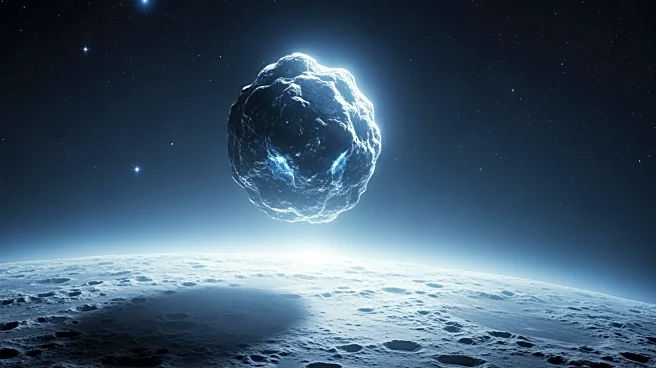
Recent research suggests that Saturn's rings were formed from a cataclysmic collision between two icy moons approximately 100 million years ago. This theory, supported by data from the Cassini spacecraft, proposes that the collision shattered the moons'
icy outer layers, creating debris that eventually formed the rings. The study indicates that the rings are relatively young, as their brightness suggests they have not been darkened by cosmic dust over billions of years. The findings challenge previous assumptions that the rings are remnants from the solar system's formation.
Why It's Important?
Understanding the origin of Saturn's rings provides insights into the dynamic processes that shape planetary systems. The discovery that the rings are a result of a relatively recent collision offers a new perspective on the history of Saturn and its moons. This knowledge can inform models of planetary formation and evolution, contributing to our broader understanding of the solar system. The study also highlights the role of cosmic collisions in creating and altering celestial bodies, emphasizing the complexity and interconnectedness of planetary systems.
What's Next?
Further analysis of Saturn's rings and their composition will help refine the timeline and details of the collision event. Continued observations and simulations may reveal more about the processes that led to the formation of the rings and their subsequent evolution. This research could also inspire similar studies of other planetary rings in the solar system, enhancing our understanding of their origins and characteristics. The findings underscore the importance of space missions like Cassini in providing critical data for unraveling the mysteries of our cosmic neighborhood.