








What's Happening?
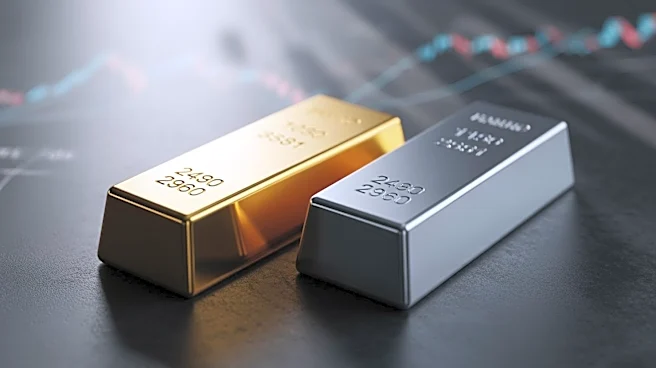
India has increased its gold import tariffs from 6% to 15% in an effort to reduce overseas purchases and alleviate pressure on its foreign exchange reserves. This policy change has led to significant market reactions, including steep discounts in gold trading
within India, where dealers are offering discounts of up to $78 an ounce. The move is part of a broader strategy to stabilize the Indian rupee, which has recently hit an all-time low. Despite the tariff increase, domestic gold and silver prices have risen, reflecting the compounded impact of the currency's depreciation. Analysts suggest that while the tariff hike may cause short-term market distortions, the long-term investment appeal of precious metals remains strong due to ongoing inflation concerns and global economic uncertainties.
Why It's Important?
The increase in gold import tariffs by India, the world's second-largest gold market, is significant as it affects global gold trading dynamics and investor sentiment. The policy aims to preserve India's foreign reserves and stabilize its currency, but it also risks destabilizing the domestic jewelry industry, which is heavily reliant on gold imports. The tariff hike could lead to increased smuggling and reduced consumer demand, particularly during peak seasons like weddings. Additionally, the policy may impact exchange-traded fund (ETF) valuations and supply channels, especially for silver, which faces greater supply constraints. The broader economic implications include potential shifts in global gold prices and investor strategies, influenced by macroeconomic factors such as U.S. Federal Reserve interest rate decisions and global central bank policies.
What's Next?
As India implements these higher tariffs, stakeholders will closely monitor the domestic market's response, particularly in terms of consumer demand and price adjustments. The India Bullion and Jewellers Association (IBJA) has proposed monetizing idle 'temple gold' to reduce import reliance and protect jobs in the jewelry sector. This proposal, if adopted, could mitigate some of the negative impacts of the tariff hike. Additionally, the ongoing depreciation of the rupee and its effects on domestic prices will be a key area of focus. Analysts expect that as existing inventories deplete, prices will more fully reflect the increased duties, potentially leading to further market adjustments.
Beyond the Headlines
The tariff increase highlights the complex interplay between national economic policies and global market dynamics. It underscores the challenges faced by emerging economies in balancing domestic economic stability with global trade pressures. The policy also raises ethical and cultural considerations, particularly regarding the use of 'temple gold' and its implications for religious and cultural institutions. Furthermore, the potential for increased smuggling and its impact on law enforcement and regulatory frameworks presents additional challenges for policymakers.