
What's Happening?
The United Nations General Assembly continues to serve as a crucial forum where the UN's 193 Member States convene to address pressing global issues, including war, peace, development, climate change,
and human rights. Richard Gowan, Director of UN and Multilateral Diplomacy at the International Crisis Group, emphasizes the Assembly's enduring importance, noting that it provides a unique platform for countries, particularly smaller nations and middle powers, to voice their concerns and engage in global affairs. Historically, the General Assembly played a central role in decolonization, allowing newly independent states to assert themselves on the world stage and challenge existing power structures. Even during the Cold War, when the Security Council was often deadlocked, the General Assembly facilitated discussions and mandated peacekeeping operations, such as the one that helped end the Suez crisis in 1956. Despite criticisms and the rise of other diplomatic forums like the G20, the Assembly continues to attract a record number of leaders annually, underscoring its relevance.
Why It's Important?
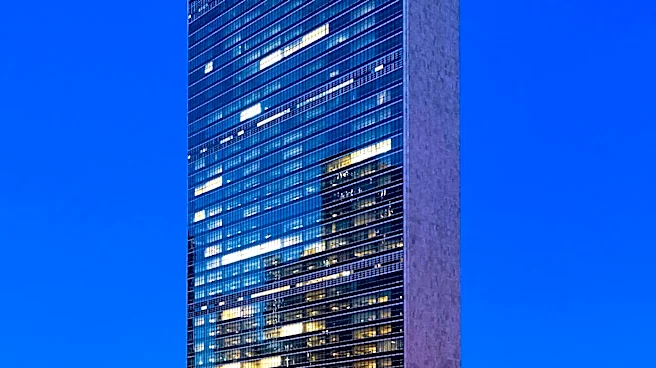
The continued vitality of the UN General Assembly is significant for global governance and multilateralism. It provides a democratic space where all member states, regardless of their economic or military power, can participate in shaping international discourse and policy. This inclusivity is particularly important for countries that may lack influence in more exclusive forums. The Assembly's role in decolonization and its focus on issues like apartheid demonstrate its capacity to drive significant global change and challenge injustices. Its ability to serve as a platform for reacting to urgent crises highlights its irreplaceable function in international diplomacy. The ongoing presence of the UN headquarters in New York also ensures that global leaders and media attention converge, amplifying the messages and decisions made within the Assembly. A weakening of the General Assembly's role could lead to a less equitable and less representative global decision-making process, potentially marginalizing the voices of many nations.
What's Next?
The UN General Assembly is expected to continue its role as a primary stage for international diplomacy, with annual high-level weeks drawing global leaders to New York. Discussions will likely persist on critical issues such as climate change, human rights, and sustainable development goals. The Assembly will also remain a key venue for addressing emerging global challenges and reacting to urgent crises. While the structure of the UN, particularly the Security Council's veto power, remains a point of contention, the General Assembly's deliberative function will continue to be essential for building consensus and shaping international norms. The ongoing debate about the UN's effectiveness and the need for reform will likely influence future discussions within the Assembly, as member states seek to enhance its capacity to address complex global issues more effectively.
Beyond the Headlines
The enduring relevance of the UN General Assembly speaks to a deeper human need for collective action and shared governance in an increasingly interconnected world. Beyond its formal resolutions and debates, the Assembly fosters a unique environment for informal diplomacy, networking, and the exchange of ideas among diverse nations. Its historical evolution, from an institution initially envisioned to sustain an imperial order to a platform for decolonization and the assertion of the Global South, reflects a dynamic adaptation to changing global realities. The Assembly's ability to provide a voice to marginalized nations and challenge powerful interests underscores its ethical significance as a forum for justice and equality. In an era marked by geopolitical fragmentation and rising nationalism, the General Assembly serves as a crucial reminder of the potential for international cooperation and the pursuit of common solutions to global problems.