



What's Happening?
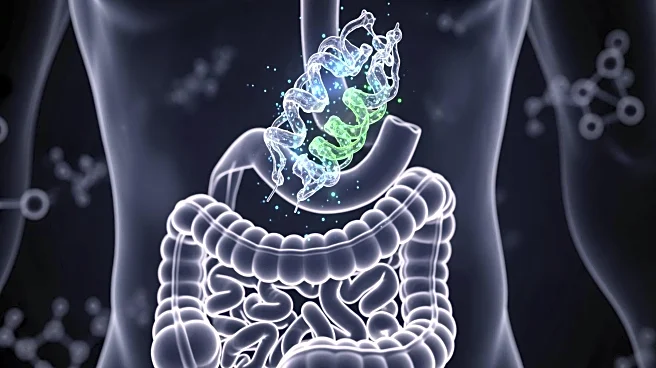
Researchers at the Massachusetts Institute of Technology (MIT) have identified a lectin protein, intelectin-2, which exhibits broad-spectrum antimicrobial activity in the gastrointestinal tract. This protein binds to sugar molecules on bacterial membranes,
trapping and hindering bacterial growth, and also strengthens the mucus barrier by crosslinking mucin molecules. The study suggests that intelectin-2 could be developed as a therapeutic agent to enhance the mucus barrier and combat infections, particularly in patients with inflammatory bowel disease.
Why It's Important?
The discovery of intelectin-2's dual functions is significant for developing new antimicrobial strategies, especially as antibiotic resistance becomes a growing concern. By reinforcing the mucus barrier and directly neutralizing bacteria, intelectin-2 offers a potential alternative to traditional antibiotics. This could lead to new treatments for gastrointestinal infections and inflammatory bowel diseases, improving patient outcomes and reducing reliance on antibiotics.
What's Next?
Future research will focus on harnessing intelectin-2's properties to develop therapeutic applications. This includes exploring its potential as an antimicrobial agent and finding ways to regulate its levels in patients with inflammatory bowel disease. The study opens avenues for designing proteins that reinforce the mucus barrier, offering a novel approach to enhancing innate immune defenses.