




What's Happening?
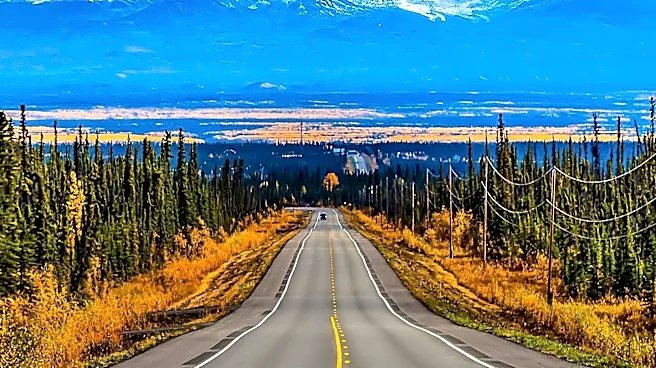
The Alaska Highway, originally constructed during World War II, spans 1,500 miles from Delta Junction, Alaska, to Dawson Creek, British Columbia. Built in 1942 by the United States and Canada, the highway was a strategic military route intended to facilitate
the movement of supplies and defense mechanisms following the attack on Pearl Harbor. Despite initial resistance from Canada due to the high costs and sparse population in the regions it connected, the urgency of wartime logistics led to its rapid construction. Over 10,000 American soldiers were involved in the project, which was completed in just eight months. Today, the highway is a well-paved route that significantly contributes to regional tourism, showcasing the evolution from its original log-based infrastructure to modern roadways.
Why It's Important?
The construction of the Alaska Highway was a pivotal moment in North American infrastructure development, demonstrating the capability to build extensive road networks in challenging environments. Its completion not only served immediate military needs but also laid the groundwork for future economic and social development in Alaska and the Yukon. The highway's existence has facilitated tourism, which is now a major economic driver in the region, attracting visitors to the natural beauty and historical significance of the area. This development underscores the long-term benefits of strategic infrastructure projects, which can transform remote regions into accessible and economically viable areas.
What's Next?
As tourism continues to grow, there may be further investments in infrastructure to support increased visitor numbers. This could include enhancements to the highway itself, as well as the development of amenities and services along the route. Additionally, the historical significance of the highway may lead to increased efforts to preserve and promote its legacy, potentially through educational programs and historical markers. Stakeholders, including local governments and tourism boards, are likely to play a key role in these developments, balancing the preservation of the highway's history with the demands of modern tourism.