







What's Happening?
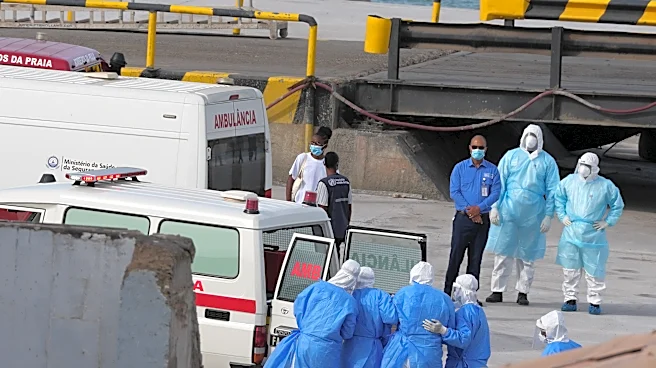
A hantavirus outbreak on the MV Hondius cruise ship has highlighted the absence of the U.S. Centers for Disease Control and Prevention (CDC) in the initial response. The outbreak, which involves American passengers, has been primarily managed by international
health experts rather than the CDC. The virus, which does not spread easily like COVID-19, has resulted in several illnesses and deaths, including a Dutch man and a German woman. The CDC's delayed response included deploying teams to Spain's Canary Islands and Nebraska to assist with the evacuation and monitoring of U.S. passengers. The agency also issued a health alert to U.S. doctors about potential imported cases. Experts have criticized the CDC's diminished role, noting it as a sign of the agency's reduced influence in international health matters.
Why It's Important?
The CDC's limited involvement in the hantavirus outbreak raises questions about the agency's current capacity to handle international health crises. Historically, the CDC has been a leader in global health security, providing expertise and coordination in outbreak situations. The current situation reflects broader changes under the Trump administration, including the U.S. withdrawal from the World Health Organization (WHO) and a shift towards bilateral health agreements. This approach may undermine the U.S.'s ability to effectively manage global health threats, potentially impacting public trust and preparedness for future outbreaks. The CDC's response is crucial for maintaining its reputation and ensuring the safety of American citizens abroad.
What's Next?
The CDC has begun to take action by sending teams to assist with the evacuation and monitoring of American passengers. However, the agency's future role in international health crises remains uncertain. The Trump administration's focus on bilateral agreements may continue to limit the CDC's involvement in global health initiatives. Public health experts are likely to call for a reassessment of the U.S.'s approach to international health collaboration, emphasizing the importance of multilateral cooperation through organizations like the WHO. The outcome of this situation could influence future U.S. health policy and the CDC's role in global health security.
Beyond the Headlines
The CDC's response to the hantavirus outbreak may have long-term implications for its credibility and effectiveness. The agency's diminished role could lead to a loss of trust among international partners and the American public. Additionally, the focus on bilateral agreements may not provide the comprehensive coverage needed to address global health crises. This situation highlights the need for a robust and coordinated international health strategy that leverages the strengths of multilateral organizations. The CDC's ability to adapt and restore its leadership role in global health will be critical in addressing future challenges.