



What's Happening?
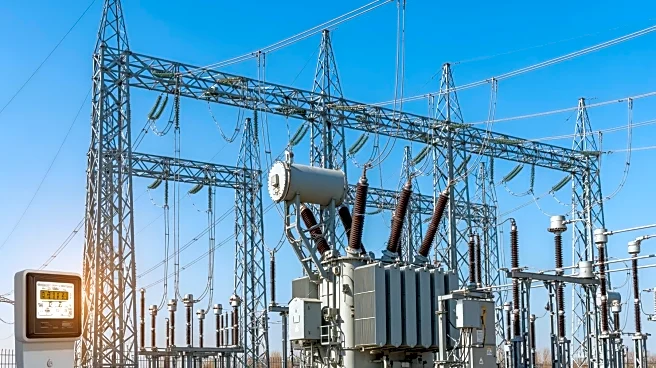
Georgia's Public Service Commission has approved a significant increase in electric power capacity, with Georgia Power Co. planning to expand by 50% to meet the growing demand from data centers. This expansion, estimated to cost $16.3 billion, is one
of the largest in the U.S. aimed at supporting the electricity needs of artificial intelligence developers. The decision, passed unanimously by the commission, is expected to result in customers paying between $50 billion to $60 billion over the coming decades, factoring in interest and guaranteed profits for the utility. Georgia Power and the commission assert that large energy users will cover their costs, potentially reducing residential power bills by 2029. However, critics argue that the expansion is a risky venture, with existing ratepayers potentially bearing the financial burden if the anticipated demand does not materialize.
Why It's Important?
The decision to increase electric capacity is crucial as it addresses the rising energy demands of data centers, which are pivotal for the development of artificial intelligence technologies. This move could position Georgia as a key player in the tech industry, attracting more data centers and related businesses. However, the financial implications for consumers are significant, with concerns about the long-term impact on electricity rates. The approval comes amid political shifts in Georgia, where recent elections saw a change in the Public Service Commission's composition, reflecting public discontent over previous rate increases. The outcome of this expansion will be closely monitored, as it could set a precedent for how states balance technological growth with consumer protection.
What's Next?
As the expansion progresses, Georgia Power will need to closely monitor demand to ensure that the projected increase in electricity usage materializes. If data centers do not consume as much power as expected, the company may need to adjust its strategy, potentially closing less efficient plants or seeking additional customers. The commission will also need to enforce Georgia Power's pledge to use new customer revenue to alleviate rate pressures. Additionally, environmental concerns regarding increased natural gas output will likely continue to be a point of contention, with ongoing debates about the sustainability of such energy sources.
Beyond the Headlines
The approval of this expansion raises broader questions about the environmental impact of increased natural gas usage and the long-term sustainability of such energy strategies. As data centers become more integral to technological advancements, the balance between economic growth and environmental stewardship will be a critical issue. The decision also highlights the political dynamics in Georgia, where energy policy is becoming a significant electoral issue, reflecting broader national trends in energy and environmental policy debates.