
What's Happening?
President Trump has initiated a new international body called the 'Board of Peace' during a ceremony at Davos. The board, which requires a $1 billion membership fee, aims to oversee peace efforts, initially
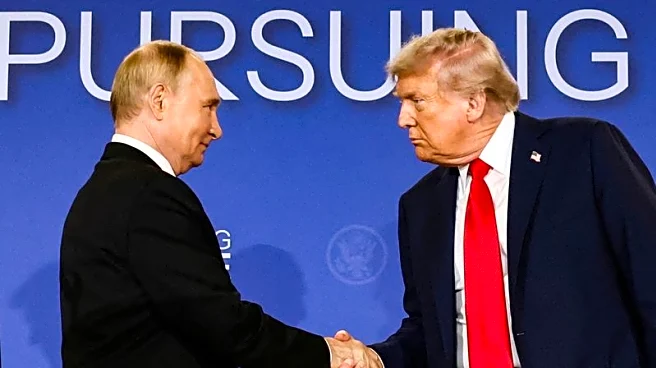
focusing on Gaza but with a broader mandate to resolve international conflicts. The board's membership has sparked controversy, particularly due to the inclusion of Russian President Vladimir Putin, who has been invited but has not yet confirmed his participation. The board's creation has been met with skepticism from key U.S. allies such as the UK and France, who have opted not to participate. The board's launch comes amid Trump's frustration over not receiving the Nobel Peace Prize, despite his claims of resolving multiple conflicts.
Why It's Important?
The establishment of the 'Board of Peace' could significantly impact international diplomacy and the existing global order. By potentially positioning itself as a rival to the United Nations, the board may alter how international conflicts are managed. The inclusion of controversial figures like Putin raises concerns about the board's legitimacy and effectiveness. The high membership fee also suggests a 'pay to play' model, which could limit participation to wealthier nations, potentially skewing the board's influence. This development could affect U.S. foreign relations, especially with allies who are wary of the board's intentions and Trump's leadership style.
What's Next?
Following the board's launch, President Trump is scheduled to meet with Ukrainian President Volodymyr Zelensky to discuss a ceasefire in Ukraine. This meeting is crucial as it addresses ongoing tensions with Russia, a key player in the board's membership. Additionally, Trump's envoy is set to meet with Putin in Moscow to further peace talks. The outcomes of these discussions could shape the board's initial actions and influence its credibility. Observers will be watching closely to see how the board's formation affects existing international alliances and whether it can achieve its ambitious peacekeeping goals.
Beyond the Headlines
The creation of the 'Board of Peace' raises ethical questions about the role of money in international diplomacy. The high cost of membership may exclude less affluent nations, potentially leading to a concentration of power among wealthier countries. This could challenge the democratic principles that underpin organizations like the United Nations. Furthermore, the board's focus on high-profile conflicts may overshadow smaller, yet significant, global issues. The board's success or failure could redefine how peace efforts are funded and managed on the world stage.