
What's Happening?
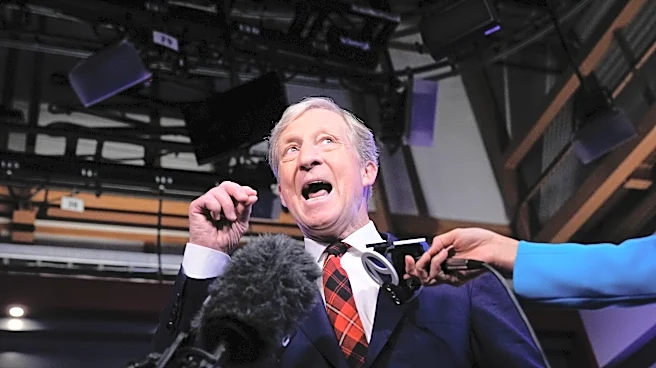
During a recent California gubernatorial debate, candidates discussed pressing issues such as the wildfire insurance crisis, climate change, and energy policies. Tony Thurmond, the Democratic State Superintendent
of Public Instruction, criticized private insurers for dropping policies amid increasing wildfire risks, suggesting withholding tax credits from non-cooperative insurers. Republican Chad Bianco attributed insurer exits to inadequate vegetation management rather than climate change. Democratic candidate Tom Steyer emphasized holding polluters accountable and advancing clean energy. Steve Hilton, a former Republican commentator, advocated for modern forest management and natural gas use. Former Health and Human Services Secretary Xavier Becerra proposed a state of emergency to freeze insurance rates. Katie Porter, a former Congresswoman, supported maintaining refineries while transitioning to green energy. San Jose Mayor Matt Mahan called for suspending the state gas tax, while Antonio Villaraigosa, former L.A. mayor, highlighted infrastructure challenges in transitioning to electric vehicles.
Why It's Important?
The debate underscores the complex challenges California faces in balancing environmental policies with economic realities. The wildfire insurance crisis highlights the tension between insurers and state regulations, affecting homeowners' ability to secure coverage. Candidates' differing views on climate change and energy policies reflect broader national debates on environmental responsibility and economic growth. The discussion on transitioning to electric vehicles and maintaining energy infrastructure is crucial as California aims to meet ambitious climate goals. These issues have significant implications for the state's economy, public safety, and environmental sustainability, influencing voter priorities and policy directions.
What's Next?
The debate sets the stage for further discussions on how California will address its wildfire insurance crisis and climate policies. Candidates' proposals, such as withholding tax credits from insurers and modernizing forest management, may influence legislative actions and regulatory changes. The outcome of the gubernatorial race could shape the state's approach to balancing environmental goals with economic needs. Stakeholders, including insurers, environmental groups, and energy companies, will likely engage in lobbying and advocacy efforts to influence policy decisions. The debate also highlights the need for infrastructure investments to support the transition to renewable energy and electric vehicles.