



What's Happening?
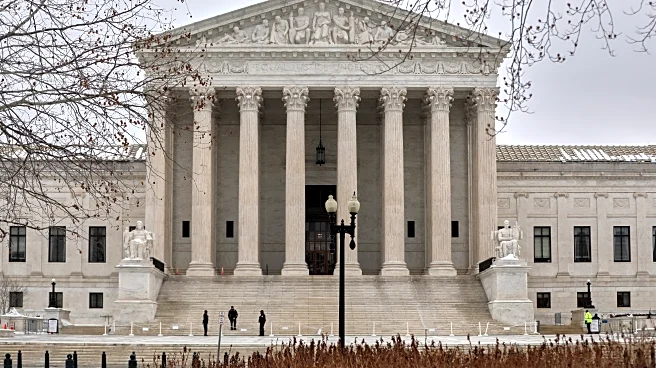
The U.S. Supreme Court has ruled against President Trump's use of the International Emergency Economic Powers Act (IEEPA) to impose global tariffs, stating that the act does not authorize the president to impose such tariffs. This decision, made with
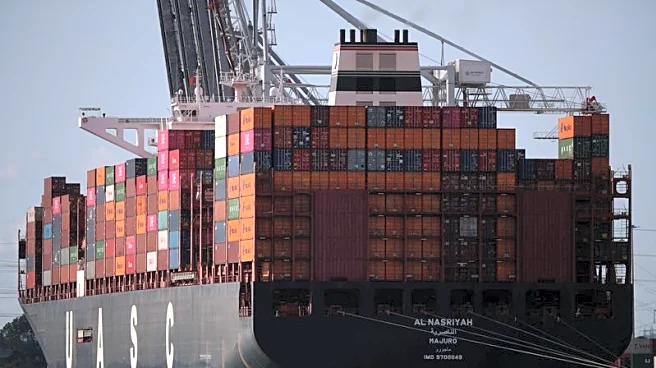
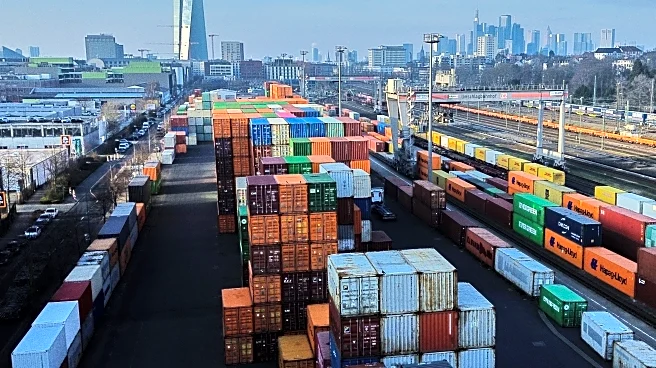
a six to three majority, upholds a lower court's ruling that Trump's tariff regime exceeded his authority. The tariffs had affected numerous countries, including the U.K., India, and the European Union, and were used as a tool to renegotiate trade deals. The ruling has been welcomed by U.S. trading partners, but it also leaves businesses facing uncertainty regarding import levies. The International Chamber of Commerce noted that while the ruling alleviates some strain on businesses, the complexity of U.S. import procedures remains a concern.
Why It's Important?
This Supreme Court decision significantly limits the president's ability to use tariffs as a foreign policy tool, which had been a hallmark of President Trump's trade strategy. The ruling is expected to ease tensions with U.S. trading partners who were affected by the tariffs, potentially leading to more stable trade relations. However, the decision also introduces uncertainty for businesses that must navigate complex import procedures without clear guidance from U.S. authorities. The ruling could lead to changes in how future administrations approach trade policy and the use of tariffs, impacting industries reliant on international trade.
What's Next?
Following the ruling, businesses and governments will be closely monitoring the U.S. administration's next steps regarding trade policy. The need for clear guidance from the Court of International Trade and relevant U.S. authorities is critical to minimize costs and prevent litigation risks. Additionally, countries like Switzerland are calling for new free trade agreements to secure their trade relations with the U.S. The ruling may prompt other countries to seek similar agreements to protect their industries from potential future tariffs.
Beyond the Headlines
The Supreme Court's decision may have broader implications for the balance of power between the executive and legislative branches in the U.S. By limiting the president's authority to impose tariffs, the ruling reinforces Congress's role in trade policy. This could lead to a reevaluation of the legal frameworks governing international trade and the use of emergency powers by the executive branch. The decision may also influence how future administrations approach the use of economic measures in foreign policy, potentially leading to more collaborative and multilateral approaches.