







What's Happening?
Recent research indicates a complex relationship between social media use and mental health, suggesting that specific design features on platforms, such as autoplay and infinite scrolling, are engineered to maximize user engagement. While these features can
lead to persistent engagement, studies have found associations between problematic social media use and negative mental health outcomes, including depression, anxiety, and sleep problems. A 2024 systematic review and meta-analysis of 182 studies involving nearly 1.17 million young people found statistically significant, albeit small, associations between social media use and depression and anxiety. Problematic use was also linked to sleep issues and reduced well-being. However, researchers consistently emphasize that these findings demonstrate associations, not direct causation, meaning social media cannot be definitively concluded to cause mental health problems in every user. The term 'social media addiction' remains a controversial scientific term rather than an established clinical diagnosis.
Why It's Important?
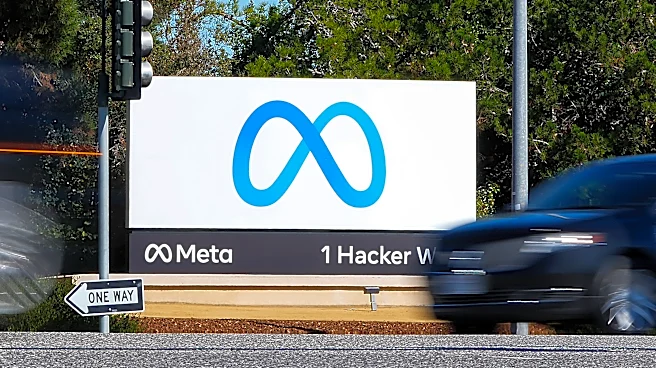
This research is crucial for understanding the potential public health implications of social media design, particularly for younger generations. The findings contribute to the ongoing debate about the ethical responsibilities of technology companies in designing platforms that may inadvertently contribute to mental health challenges. For policymakers, this information provides a scientific basis for considering regulations that could mandate changes to platform design, such as those seen in the recent Meta settlement. For parents, educators, and healthcare professionals, it underscores the importance of monitoring social media use and promoting healthy digital habits. The distinction between correlation and causation is vital, as it guides interventions and policy. Instead of outright banning social media, the focus shifts to understanding and mitigating the risks associated with specific design elements and problematic usage patterns, aiming to foster a healthier digital environment for users.
What's Next?
The ongoing research into social media's effects on mental health will likely continue to inform public discourse and potential regulatory actions. As more studies emerge, there may be increased pressure on social media companies to voluntarily or mandatorily implement design changes that prioritize user well-being over engagement metrics. This could include more options for users to control features like infinite scrolling, autoplay, and notifications, or the development of new tools to help users manage their screen time and digital interactions. The legal landscape is also evolving, with ongoing lawsuits and settlements, such as Meta's, pushing for greater accountability. Furthermore, there will likely be a continued emphasis on digital literacy education for young people, teaching them how to navigate social media responsibly and recognize problematic usage patterns. The scientific community will also work towards a more precise understanding of 'problematic social media use' and its potential classification, which could further influence clinical approaches and public health strategies.
Beyond the Headlines
Beyond the immediate concerns of mental health, the discussion around social media design touches upon deeper societal implications regarding attention, cognitive function, and the nature of human interaction in the digital age. The constant stream of information and notifications, driven by algorithmic curation, can create a 'deficiency disease' where individuals are deprived of the accidental, low-stakes in-person encounters that foster tolerance, empathy, and trust. Unlike traditional community spaces, social media platforms often sort individuals into 'selective homogeneity,' reinforcing existing beliefs and potentially exacerbating societal divisions. The continuous pursuit of engagement by design can lead to a form of 'social media fatigue,' prompting some users to seek out analog experiences and reduce their screen time. This suggests a growing awareness of the trade-offs involved in a screen-dominated world and a potential cultural shift towards valuing real-world interactions and diverse social connections as an antidote to digital isolation.