





What's Happening?
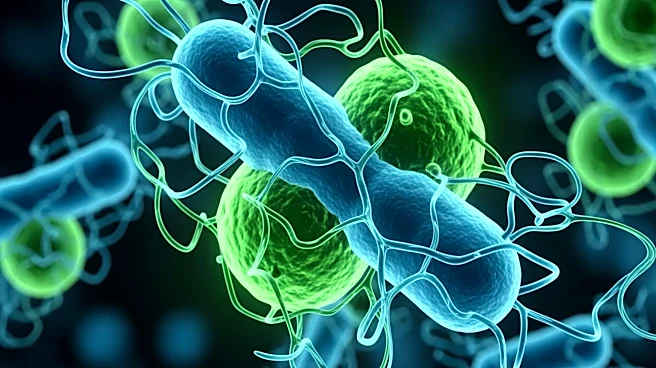
Researchers at the University of Illinois Chicago have developed a novel anti-cancer therapy inspired by bacteria found in tumors. This therapy, when combined with radiation, has shown significant efficacy in animal models of prostate cancer by effectively
halting tumor growth. The therapy utilizes a peptide called aurB, derived from a bacterial protein, which disrupts energy production in tumor cells' mitochondria, cutting off their fuel supply. This approach targets the mitochondria, which are crucial for cell survival and are often altered in cancer cells to support rapid growth. The research, published in Signal Transduction and Targeted Therapy, highlights the potential of bacterial proteins as sources for anti-tumor agents.
Why It's Important?
This development is significant as it opens new avenues for cancer treatment by leveraging bacterial proteins to target cancer cell mitochondria. The therapy's ability to work independently of the p53 gene, which is often mutated in cancer patients, makes it a versatile option for various cancer types. The success of this approach in preclinical models suggests a promising future for its application in human clinical trials. If successful, this could lead to more effective and less toxic cancer treatments, benefiting patients with resistant forms of cancer and potentially improving survival rates.
What's Next?
The research team plans to pursue clinical trials to test the efficacy and safety of the aurB peptide in humans. They have patented the peptide and are exploring further bacterial proteins that could serve as cancer drug candidates. This ongoing research could lead to the discovery of additional bacterial proteins with anti-cancer properties, expanding the arsenal of cancer therapies. The collaboration with various departments at UIC underscores the interdisciplinary effort required to advance this promising therapy from the lab to clinical application.